
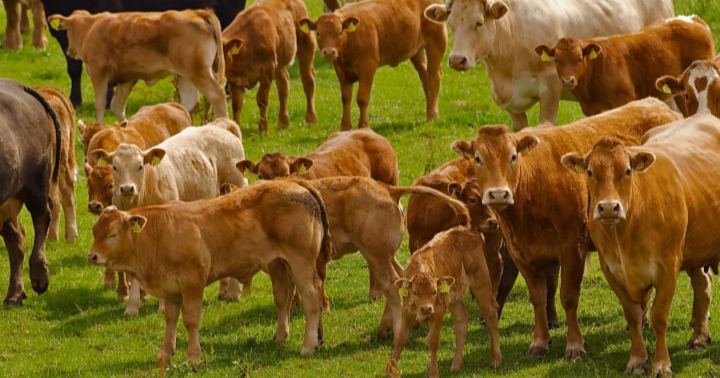
Livestock breeding programs are essential for improving agricultural output, ensuring food security, and supporting rural livelihoods. Through planned selection and mating of animals with desirable traits, these programs aim to produce offspring that perform better than previous generations in areas like growth, milk production, disease resistance, and environmental adaptability.
Livestock such as cattle, sheep, goats, pigs, and poultry provide food, income, and raw materials. Traditional breeding methods often depend on chance or simple observation, which slows progress. In contrast, modern breeding programs use scientific methods, accurate records, and technology to achieve faster and more reliable improvements.
The main objectives of livestock breeding include increasing productivity, improving product quality, enhancing resistance to diseases, promoting adaptability to harsh environments, and improving reproductive efficiency. These goals help farmers obtain better yields and more resilient animals.
Animal breeding is based on several important principles. Selection involves choosing animals with superior characteristics to reproduce. This can be based on physical appearance, performance records, or genetic information. Heritability refers to the extent to which traits are passed from parents to offspring, while genetic variation ensures that there are differences within a population that can be improved upon.
There are different types of breeding programs. Pure breeding involves mating animals within the same breed to maintain specific traits, though it may lead to inbreeding if not carefully managed. Crossbreeding combines animals from different breeds to take advantage of hybrid vigor, resulting in stronger and more productive offspring. Grading up improves local breeds by repeatedly crossing them with superior breeds, while synthetic breeding creates new breeds by combining and stabilizing desirable traits over time.
Modern technologies have greatly improved breeding practices. Artificial insemination allows the use of high-quality male genetics across many animals. Embryo transfer enables productive females to produce more offspring within a short period. Genomic selection and marker-assisted selection use genetic information to identify animals with the best potential early in life.
Despite these advancements, livestock breeding faces several challenges. These include limited access to technology, high costs, poor record-keeping, and the risk of inbreeding. Climate change also affects animal performance by altering environmental conditions and feed availability.
In developing countries, effective breeding programs can significantly improve food production, increase farmers’ income, and strengthen resilience to environmental changes. They also help maintain valuable local breeds while enhancing their productivity.
In conclusion, livestock breeding programs are vital for sustainable agricultural development. By combining traditional practices with modern scientific approaches, farmers can produce animals that are more productive, adaptable, and resilient, contributing to long-term food security and economic growth.