
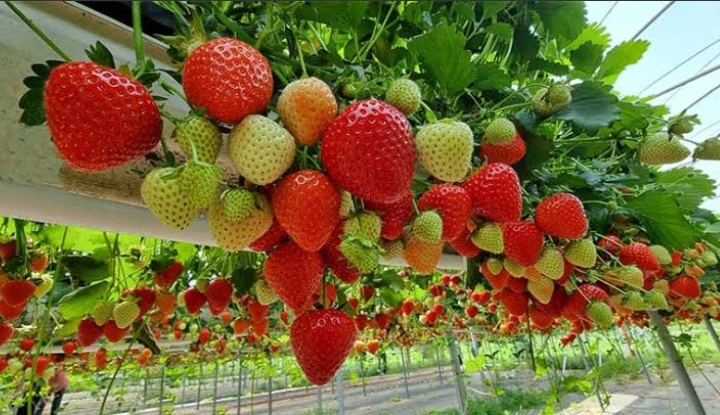
Hydroponics provides an innovative way to cultivate strawberries without the use of soil. By delivering nutrients directly to the plant roots through water, this method promotes faster growth, higher fruit yields, and the possibility of year-round production. It also minimizes soil-borne diseases and pests, making it ideal for both home gardeners and commercial growers.
Understanding Hydroponic Strawberry Cultivation
In hydroponic strawberry systems, plants grow in containers or troughs filled with inert media such as coconut coir, perlite, clay pellets, or rockwool. Roots are immersed in or receive a steady supply of nutrient-rich water, allowing the plants to absorb essential minerals and oxygen efficiently.
Common Hydroponic Methods for Strawberries
- Nutrient Film Technique (NFT): A thin stream of nutrient solution flows over the roots in sloped channels.
- Deep Water Culture (DWC): Roots hang directly in oxygenated nutrient solution.
- Drip Systems: Nutrient solution drips onto roots in individual containers.
- Vertical Systems: Stacked layers or towers optimize space for high-density growing.
Advantages of Hydroponic Strawberries
Accelerated Growth: Continuous nutrient availability helps plants develop more quickly.
Enhanced Yields: Healthy roots and optimal nutrition often lead to larger and more abundant fruit.
Year-Round Cultivation: Controlled indoor environments allow production regardless of season.
Fewer Pests and Diseases: Soil-related problems are minimized.
Efficient Water Use: Hydroponic systems recycle water and reduce fertilizer waste.
Key Factors for Success
Lighting: Strawberries require 10–14 hours of light, which may involve supplemental grow lights indoors.
Nutrients: Balanced solutions with nitrogen, potassium, calcium, and magnesium are essential.
pH and Electrical Conductivity (EC): Maintaining pH around 5.5–6.5 ensures proper nutrient absorption.
Pollination: Indoor plants may need manual assistance or pollinator insects.
Temperature and Humidity: Ideal ranges are 18–25°C with moderate humidity to encourage flowering and prevent fungal issues.
Suitable Strawberry Varieties
Varieties well-suited for hydroponics include Albion, Seascape, Quinault, Chandler, and Mara des Bois, known for consistent yields and adaptability to controlled environments.
Potential Challenges
Overwatering, insufficient aeration, or nutrient imbalances can cause root problems. Indoor systems may require manual pollination, and equipment setup can be costly. Regular monitoring and maintenance prevent most issues.
Summary
Hydroponic strawberry cultivation offers a productive alternative to traditional soil gardening. With careful management of nutrients, light, and environmental conditions, growers can achieve faster growth, higher-quality fruit, and efficient use of resources, making it a practical choice for small-scale and commercial production.