
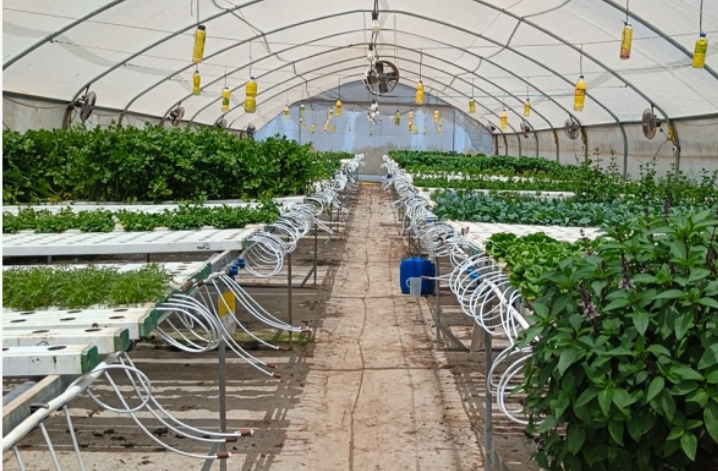
Introduction
Water conservation has become a critical issue in modern agriculture due to increasing population growth, climate change, and limited freshwater resources. Hydroponics, a method of growing plants without soil using nutrient-rich water solutions, offers an effective approach to reducing water consumption while maintaining high crop productivity. By delivering water directly to plant roots and reusing nutrient solutions, hydroponic systems significantly improve water-use efficiency compared to traditional farming methods.
Understanding Water Use in Hydroponic Systems
In conventional soil farming, a large portion of irrigation water is lost through evaporation, runoff, and deep drainage beyond the root zone. Hydroponic systems minimize these losses by supplying water precisely where plants need it. The nutrient solution circulates within a controlled system, allowing unused water to be collected and reused multiple times.
Plants absorb only the required amount of water and nutrients, making the process highly efficient and reducing overall waste.
Reasons Hydroponics Uses Less Water
Hydroponic farming can reduce water use by up to 80–90% compared to soil-based agriculture due to several factors:
- Direct delivery of water to plant roots
- Limited evaporation because soil is absent
- Continuous recycling of nutrient solutions
- Reduced runoff and leakage
- Accurate monitoring of plant water requirements
These advantages make hydroponics particularly valuable in areas facing water scarcity.
Hydroponic Systems and Their Water Efficiency
1. Nutrient Film Technique (NFT)
NFT systems circulate a thin layer of nutrient solution over plant roots. Because only a small amount of water flows continuously, water waste is minimal.
2. Deep Water Culture (DWC)
In this system, plant roots remain submerged in oxygenated nutrient solutions. Although larger reservoirs are used, water efficiency remains high due to recirculation.
3. Drip Hydroponic Systems
Drip systems supply measured amounts of water directly to each plant. Excess solution is collected and reused, preventing water loss.
4. Ebb and Flow (Flood and Drain)
This system periodically floods plant roots with nutrient solution and then drains it back into a reservoir for reuse, conserving water effectively.
Water Recycling and Management
A key feature of hydroponics is water recycling. Nutrient solutions move through pumps and pipelines, reaching plant roots before returning to the reservoir. Proper filtration and periodic replacement of the solution help maintain water quality and prevent nutrient imbalance or disease spread.
Careful monitoring ensures that recycled water remains safe and effective for plant growth.
Factors Affecting Water Efficiency
Crop Type
Different crops require varying amounts of water. Leafy vegetables typically consume less water than fruiting plants such as tomatoes and cucumbers.
Environmental Conditions
Temperature, humidity, and airflow influence plant transpiration rates. Controlled environments help maintain efficient water use.
System Design and Maintenance
Leaks, blockages, or poor system design can reduce water efficiency. Regular inspections and maintenance are necessary to ensure optimal performance.
Nutrient Balance
Correct nutrient concentrations improve water uptake. Imbalanced solutions can cause plant stress and inefficient water use.
Strategies to Improve Water Efficiency
Growers can enhance water conservation in hydroponic systems through the following practices:
- Monitor water levels frequently.
- Use sensors to track pH and electrical conductivity.
- Cover reservoirs to reduce evaporation.
- Repair leaks immediately.
- Maintain proper oxygen levels in the nutrient solution.
- Use automated irrigation systems for precise water delivery.
These practices help maximize plant growth while minimizing water consumption.
Environmental Benefits
Efficient water use in hydroponics supports environmental sustainability by:
- Conserving freshwater resources
- Reducing agricultural runoff and pollution
- Allowing crop production in arid or urban environments
- Supporting indoor and vertical farming
- Reducing pressure on natural ecosystems
Hydroponics also reduces reliance on large-scale irrigation systems commonly used in traditional agriculture.
Challenges and Considerations
Although hydroponics is water-efficient, proper management is essential. Poor maintenance may lead to algae growth, nutrient accumulation, or disease spread through recycled water. Regular cleaning, filtration, and monitoring are necessary to maintain system health and efficiency.
Future Prospects of Water-Efficient Farming
As global demand for food increases and water resources become more limited, hydroponics is expected to play a major role in sustainable agriculture. Advances in automation, smart sensors, and precision farming technologies continue to improve water efficiency and system reliability.
Conclusion
Water efficiency is one of the greatest advantages of hydroponic farming. By recycling nutrient solutions, minimizing evaporation, and delivering water directly to plant roots, hydroponic systems use significantly less water than traditional agricultural methods. With proper management and technological support, hydroponics provides a sustainable solution for producing food while conserving valuable water resources.