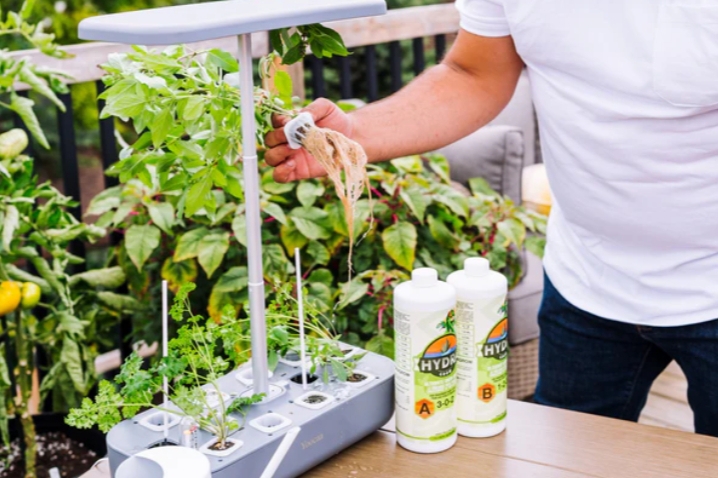
Hydroponics is a method of growing plants without soil, where all nutrients are supplied through water. Since there is no soil to store or provide nutrients, growers must carefully manage what plants receive. Getting the right balance is crucial for strong growth, good yields, and overall plant health.
Understanding Plant Nutrients
Plants depend on three main groups of nutrients.
Primary macronutrients are needed in large amounts. Nitrogen supports leafy growth and gives plants their green color. Phosphorus helps roots develop and plays a key role in flowering. Potassium improves overall plant strength and resistance to disease.
Secondary nutrients are required in moderate quantities. Calcium helps build strong cell walls, magnesium is vital for photosynthesis because it forms part of chlorophyll, and sulfur contributes to protein formation and enzyme activity.
Micronutrients are needed in very small amounts but are still essential. These include iron, manganese, zinc, copper, boron, molybdenum, and chlorine. Even slight deficiencies can affect plant development.
Nutrient Solutions in Hydroponics
In hydroponic systems, nutrients are dissolved in water, creating a solution that roots absorb directly. This method allows plants to take in nutrients quickly and efficiently. It also gives growers full control over what plants receive, reducing waste but requiring careful monitoring.
Importance of pH Levels
The pH of the nutrient solution determines how easily plants can absorb nutrients. The ideal range for most hydroponic systems is between 5.5 and 6.5. If the pH goes outside this range, nutrients may become unavailable to the plant, even if they are present in the solution.
Electrical Conductivity (EC)
Electrical conductivity measures how concentrated the nutrient solution is. A low EC means plants may not be getting enough nutrients, while a high EC can lead to nutrient burn. Different growth stages require different EC levels, with seedlings needing less and mature plants needing more.
Nutrient Needs at Different Growth Stages
Plants require different nutrient balances as they grow. During the vegetative stage, they need more nitrogen to support leaf and stem development. In the flowering or fruiting stage, higher levels of phosphorus and potassium are necessary to encourage blooms and fruit production.
Types of Hydroponic Nutrients
Liquid nutrients are easy to use and are often preferred by beginners. Powdered nutrients are more economical and last longer. Nutrients can also be organic or synthetic. Organic options come from natural sources and are environmentally friendly but can be harder to manage. Synthetic nutrients are precisely formulated and easier to control, making them widely used.
Common Nutrient Issues
Imbalances can quickly show in plant health. Yellowing leaves may indicate a lack of nitrogen or iron. Burnt leaf tips often result from too strong a nutrient solution. Slow or stunted growth can be caused by poor nutrient balance or incorrect pH levels.
Tips for Better Results
Regularly check pH and nutrient strength. Use clean water whenever possible and replace the nutrient solution every one to two weeks. Store nutrients in a cool, dark place and avoid adding too much at once, as overfeeding can harm plants.
Final Thoughts
Nutrients play a central role in hydroponic gardening. By supplying the right elements in the correct balance, growers can achieve faster growth and better yields than traditional soil farming. Once you understand how nutrients work, hydroponics becomes a precise and highly productive way to grow plants. 🌱