
Introduction
Cattle breeds differ in their productivity, physical characteristics, and ability to adapt to different environments. Three commonly compared types are the , , and indigenous (local) breeds. Each has distinct advantages depending on farming needs and conditions.
Friesian (Holstein Friesian)
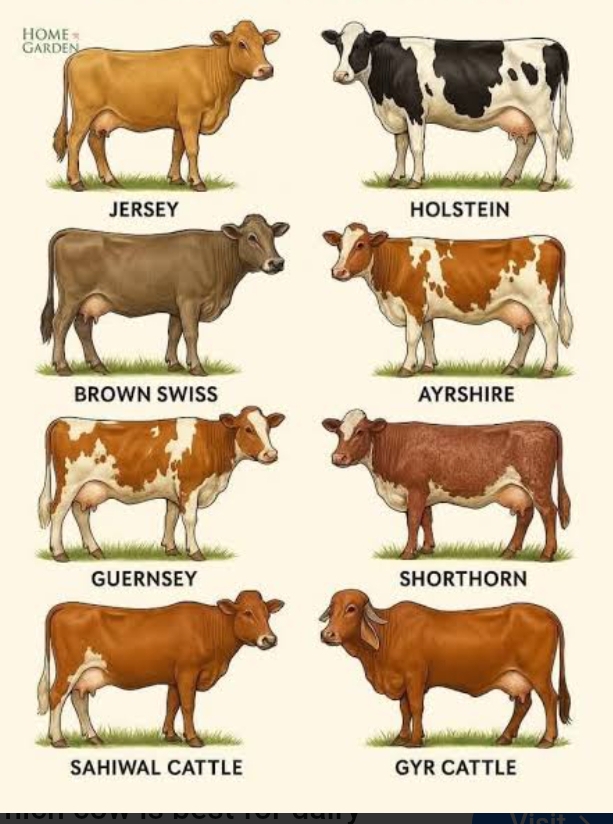
Holstein Friesians are widely recognized for their exceptional milk production. They originated from Europe, specifically the Netherlands and Germany, and are easily identified by their black-and-white markings. These cattle produce large volumes of milk, although the fat content is moderate. They perform best in cooler climates and require high-quality feed along with intensive management. Because of their high production, they are commonly used in large-scale dairy operations.
Jersey Cattle
Jersey cattle are smaller in size but are valued for producing milk that is rich in butterfat. They originated from the Island of Jersey and usually have a light to dark brown color. Although their milk yield is lower than that of Friesians, the quality of their milk is higher. Jerseys adapt well to different environmental conditions and require less feed, making them more economical for many farmers.
Indigenous (Local) Breeds
Indigenous breeds are native to specific regions and are well adapted to local environmental conditions. Their appearance varies widely depending on the region. These cattle generally produce lower amounts of milk, but they are highly tolerant of harsh climates and have strong resistance to diseases. They can survive on low-quality feed and require minimal management, making them suitable for traditional farming systems.
Key Differences
Friesians produce the highest quantity of milk, while Jerseys produce milk with higher fat content. Indigenous breeds typically yield less milk but are more resilient. In terms of adaptability, indigenous breeds perform best under harsh conditions, followed by Jerseys, while Friesians require more controlled environments. Feeding and management needs are highest for Friesians, moderate for Jerseys, and lowest for indigenous breeds. Indigenous cattle also tend to have better resistance to diseases compared to the other breeds.
Suitability for Farmers
Friesians are suitable for farmers focused on maximizing milk production under well-managed conditions. Jerseys are a good choice for those who want high-quality milk with lower feeding costs. Indigenous breeds are ideal for farmers operating in challenging environments or with limited resources.
Conclusion
Each of these cattle types has its own strengths and limitations. Friesians are known for high milk output, Jerseys for rich milk quality, and indigenous breeds for their hardiness and adaptability. The best choice depends on the farmer’s goals, environment, and available resources.