
Introduction
Artificial insemination (AI) in dairy cows is a modern breeding technique used to improve herd genetics and increase milk production without natural mating. It involves collecting semen from selected bulls, processing it, and carefully placing it into the cow’s reproductive tract at the correct time for fertilization. When properly managed, it improves productivity and overall herd quality.
Heat Detection (Estrus Identification)
The process begins with identifying when a cow is in heat. This is the fertile period when conception is possible. Common signs include standing still when mounted by other cows, restlessness, clear vaginal mucus, swollen vulva, reduced feed intake, and increased vocalization. Accurate heat detection is essential for successful insemination.
Timing of Insemination
Timing plays a key role in conception success. Insemination is usually done about 12 hours after the first signs of heat appear. This follows the AM–PM rule: cows seen in heat in the morning are inseminated in the evening, while those seen in the evening are inseminated the next morning. This timing ensures that sperm and egg meet at the right moment.
Preparation of Equipment and Semen
All equipment must be clean and sterile before use. Frozen semen is removed from liquid nitrogen storage and thawed in warm water at about 35–37°C for a short period. It is then loaded into an insemination gun. Proper hygiene is necessary to maintain semen quality and avoid contamination.
Restraint of the Cow
The cow is safely restrained in a cattle crush or head gate to prevent movement during the procedure. A calm animal reduces stress and improves the chances of successful conception.
Cleaning the Reproductive Area
The external genital area is cleaned thoroughly to remove dirt and manure. This helps prevent infection. A clean, lubricated glove is worn to maintain hygiene and ensure safe handling.
Insemination Procedure (Recto-Vaginal Technique)
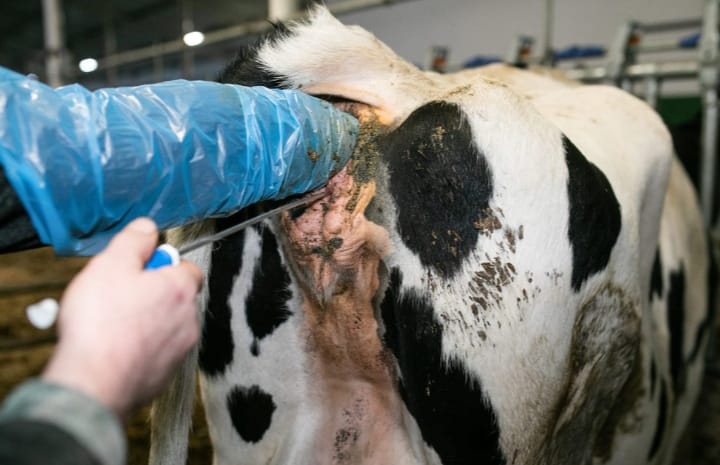
The recto-vaginal method is used for insemination. One hand is inserted into the rectum to locate and hold the cervix, while the other hand guides the insemination gun through the vagina. The gun is carefully passed through the cervix into the uterine body, where semen is slowly released. Correct placement is important for fertilization success.
Post-Insemination Care
After semen deposition, the instrument is gently removed and the cow is allowed to rest in a calm environment. She should be provided with proper feed, clean water, and monitored for signs of returning to heat in the following weeks.
Pregnancy Detection
Pregnancy is confirmed after about 35 to 45 days using rectal palpation or ultrasound scanning. If the cow is not pregnant, she will return to heat and can be inseminated again.
Conclusion
Artificial insemination is an important tool in dairy farming that improves genetics, increases milk production, and eliminates the need for a breeding bull. Success depends on proper timing, good hygiene, correct technique, and skilled handling.