
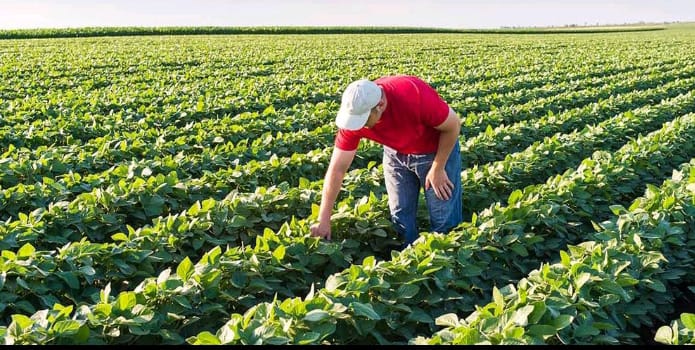
As climate instability intensifies, soils deteriorate, and farming inputs become more expensive, producers worldwide are seeking systems that are not only productive but also sustainable and adaptable. Agroecology presents a compelling solution. By applying ecological concepts to agriculture, it enhances farm resilience enabling farming systems to endure environmental, economic, and social pressures while sustaining long term productivity.
Understanding Agroecology
Agroecology is both a scientific field and a practical farming approach. It merges ecological science the study of interactions between living organisms and their environments with agricultural practices. Instead of depending heavily on synthetic fertilizers, pesticides, and monocropping, agroecology promotes biodiversity, soil vitality, nutrient recycling, and the use of natural ecosystem functions.
It combines traditional agricultural knowledge with modern science to create farming systems that operate similarly to natural ecosystems.
Key Ecological Foundations of Agroecology
- Biodiversity Promotes Stability
Natural ecosystems thrive on diversity, which enhances their stability. Agroecological farms replicate this diversity through:
- Crop rotation
- Intercropping
- Agroforestry
- Integrated livestock systems
Diversification reduces vulnerability to pests and crop failure while improving productivity. If one crop performs poorly due to disease or drought, others can compensate, minimizing financial loss.
- Soil Health as the Cornerstone
Healthy soil is central to resilient farming. Agroecology emphasizes:
- Compost and organic fertilizers
- Cover cropping
- Minimal or no tillage
- Mulching
These methods increase soil organic matter, encourage microbial activity, and improve moisture retention. Robust soils resist erosion, store carbon, and better tolerate extreme weather events.
- Recycling Nutrients and Limiting External Inputs
Rather than relying on synthetic fertilizers, agroecological systems circulate nutrients within the farm. For example:
Livestock manure enriches crop fields
Crop residues decompose to nourish soil organisms
Nitrogen fixing plants restore soil fertility
This internal cycling lowers production costs and protects farmers from fluctuations in global input markets.
- Ecological Pest and Disease Management
Agroecology supports natural pest control by fostering habitats for beneficial organisms. Features like hedgerows and flowering plants attract predators that manage pest populations naturally.
For instance, coffee growers in Brazil who incorporated shade trees observed improved microclimates and fewer pest problems. Likewise, agroforestry practices in Kenya have boosted yields while maintaining ecological balance.
By reinforcing natural ecological interactions, farms reduce dependence on chemical pesticides.
- Climate Resilience and Environmental Benefits
Agroecological farms are better prepared to handle climate stress because they:
Improve water absorption and storage
Sequester carbon in soil and vegetation
Diversify income sources
Lower greenhouse gas emissions
Practices such as agroforestry and regenerative agriculture contribute to climate mitigation while enhancing farm adaptability.
Strengthening Social and Economic Systems
Resilience extends beyond ecology to include social and economic stability. Agroecology often encourages:
Community seed-saving initiatives
Peer learning among farmers
Localized food networks
Community-supported agriculture models
By decreasing reliance on multinational corporations and volatile global markets, farmers gain greater independence and economic security.
Global institutions like the Food and Agriculture Organization (FAO) acknowledge agroecology as a vital strategy for sustainable food systems. Research partnerships such as CGIAR are also integrating agroecological principles into agricultural development programs.
Demonstrated Benefits Worldwide
Across continents, agroecological practices have resulted in:
Higher productivity in smallholder farms
Reduced production expenses
Improved soil fertility
Greater tolerance to drought
Increased biodiversity
In areas vulnerable to extreme weather, diversified farms often recover more quickly than monoculture operations.
Barriers and Future Opportunities
Despite its advantages, agroecology faces obstacles, including:
Limited policy backing in some regions
Transitional yield variability
Greater knowledge and management requirements
Nevertheless, growing recognition of sustainability challenges is increasing institutional and policy support. Incentives for soil conservation, biodiversity protection, and local food systems could accelerate wider adoption.
Agroecology represents a holistic transformation of agriculture. By aligning farming systems with ecological processes, it enhances resilience to climate change, market volatility, and environmental degradation.
In a world marked by uncertainty, resilient agricultural systems are essential. Agroecology demonstrates that working in harmony with nature can sustain food production while reinforcing the environmental and social foundations upon which agriculture depends.