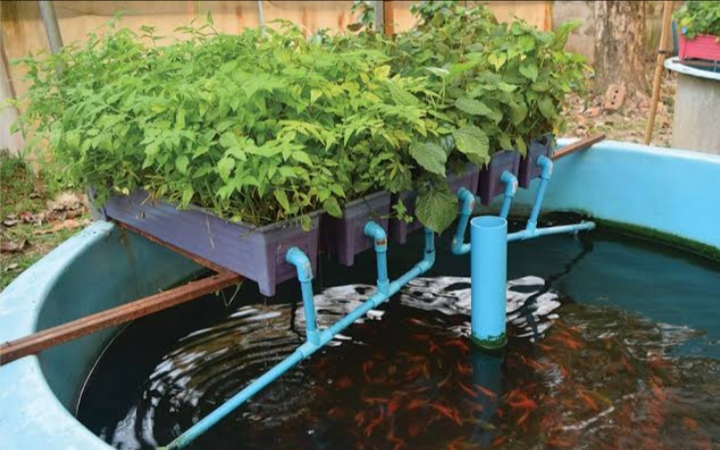
Aquaponics is a sustainable food production system that combines aquaculture(raising fish) with hydroponics (growing plants without soil). In a single integrated system, fish and plants support each other through a natural biological cycle creating an efficient, water-saving method of growing fresh.
How Aquaponics Works
Aquaponics is built around a simple principle: fish waste becomes plant food.
1. Fish are raised in a tank and produce waste (ammonia).
2. Beneficial bacteria convert ammonia → nitrites → nitrates.
3. Plants absorb nitrates as nutrients.
4. Cleaned water circulates back to the fish tank.This process mimics natural ecosystems like ponds and wetlands—but in a controlled environment.
Core Components of an Aquaponics System
1. Fish Tank: This is where fish are raised. Common species include:Tilapia(hardy and beginner-friendly), Catfish Trout (in cooler climates), Ornamental fish like goldfish or koi.
2. Grow Bed: Plants grow here, either in media (like clay pebbles) or in floating rafts. Popular crops:Lettuce, Spinach, Kale, Herbs (basil, mint), Tomatoes and peppers (in larger systems).
3. Biofilter: Beneficial bacteria colonize surfaces in the system and convert toxic ammonia into plant-usable nutrients.
4. Water Pump & Plumbing: Keeps water circulating between fish tank and grow beds.
Types of Aquaponics Systems
- Media Bed System: Plants grow in gravel or clay pebbles Ideal for beginners* Simple and versatile.
- Deep Water Culture (DWC) / Raft System: Plants float on rafts. Roots hang directly in nutrient-rich water, Common in commercial production.
- Nutrient Film Technique (NFT):Thin stream of water flows through pipes,suitable for small leafy greens, requires good filtration.
Benefits of Aquaponics.
- Uses up to 90% less water than traditional farming
- No synthetic fertilizers needed
- Minimal chemical pesticides
- Produces both fish and vegetables
- Environmentally friendly and space-efficient-
Challenges to Consider:
Requires monitoring of water quality (pH, ammonia, nitrates).Initial setup cost can be high. Fish health must be carefully managed. System balancing takes time and learning
Simple Steps in aquaponics
1. Choose your fish species.
2. Set up tank, grow bed, and pump.
3. Cycle the system (establish beneficial bacteria).
4. Add fish gradually.
5. Plant seedlings.
6. Monitor water weekly.
Is Aquaponics Right for You?Aquaponics is ideal for: Urban gardeners, Schools and educational projects, Sustainable farming enthusiasts,Small-scale commercial growers
It blends biology, ecology, and food production into one elegant system. While it requires careful setup and monitoring, once balanced, it becomes a productive and rewarding way to grow fresh food year-round.