
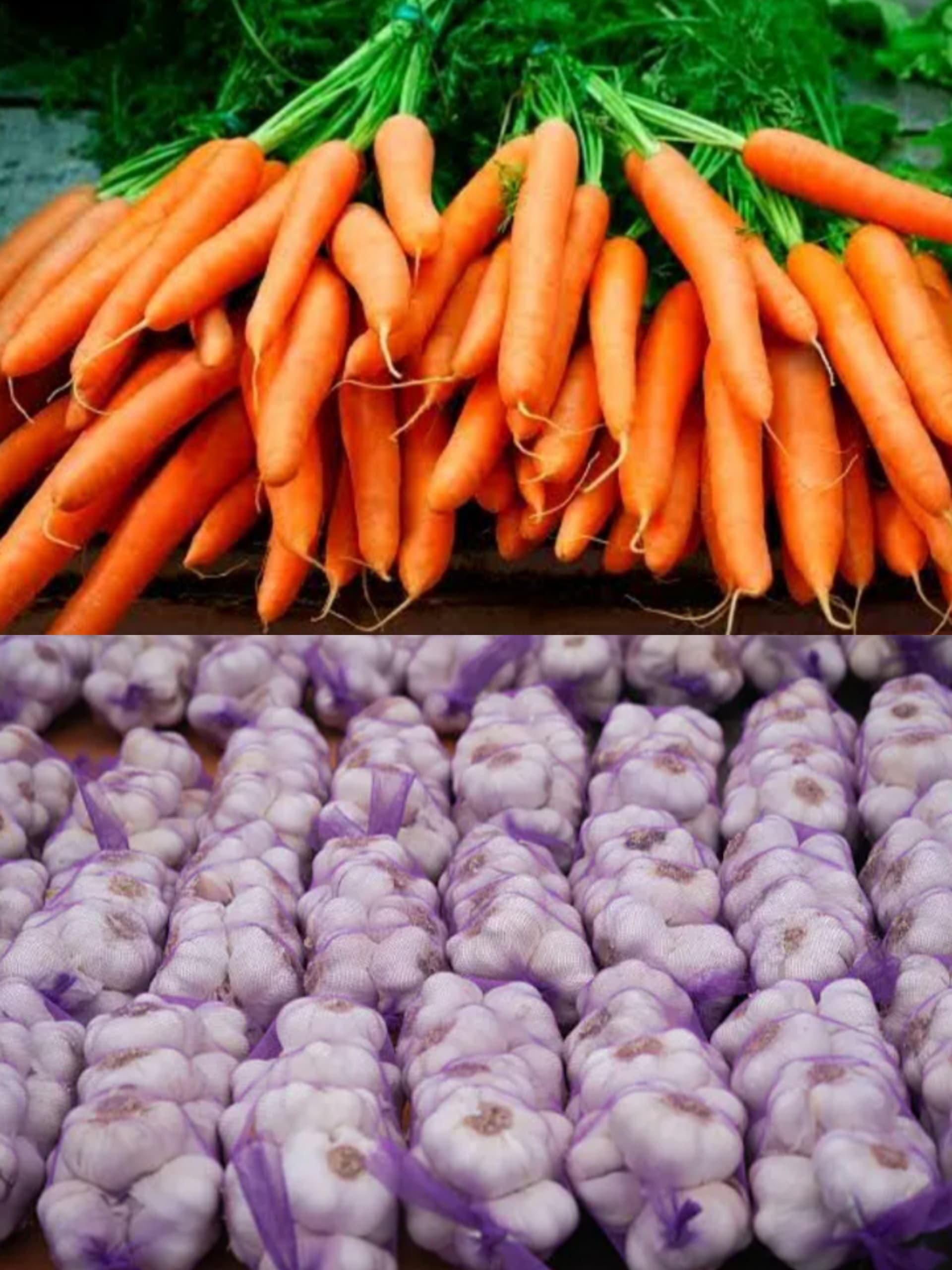
Nigeria’s agriculture is a key part of its economy, and vegetables like carrots and garlic are important for nutrition and income.
Carrot Production
Carrots are mostly grown in northern states such as Plateau, Kano, Kaduna, and Sokoto due to favorable climates. Nigeria is the largest carrot producer in Sub-Saharan Africa, but production is below its potential. Carrots are widely consumed locally, especially in salads, stews, and juices.
Challenges include low yields, poor marketing, post-harvest losses, and seasonal production, which limits year-round availability. Efforts are being made to expand cultivation to southern regions.
Garlic Production
Garlic is cultivated mainly in northern Nigeria under irrigation during the dry season. Production is modest, around 2,000 tonnes per year, concentrated in states like Sokoto, Kano, Borno, and Kebbi. Garlic has culinary and medicinal uses, and opportunities exist in processing into powder, flakes, or oil.
Challenges include limited cultivated area, low productivity, inadequate storage, and weak market structures.
Opportunities and Way Forward
Improving production of both crops requires:
- Better access to quality seeds, irrigation, and finance
- Development of processing and storage facilities
- Stronger market linkages and farmer cooperatives
- Training and agronomic support to increase yields
Conclusion:
Carrot and garlic farming in Nigeria has strong economic and nutritional potential. With better infrastructure, modern farming practices, and value-added processing, these crops can contribute more to food security, rural incomes, and agricultural growth.