
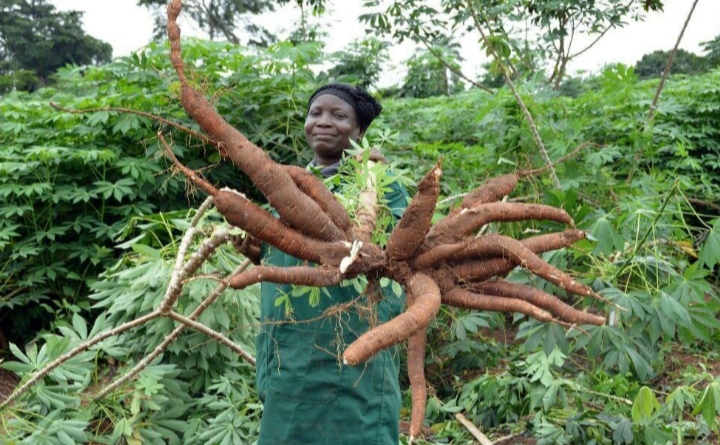
Cassava is a vital food crop grown in many tropical regions, especially across Africa. It contributes greatly to food security, rural income, and national economic development. In Nigeria, cassava is widely cultivated and consumed in several forms such as garri, fufu, and cassava flour. Its ability to thrive in different soil conditions and withstand unfavorable weather makes it an important crop for many small-scale farmers. However, while cassava farming offers many opportunities, it also comes with several challenges.
One of the key opportunities in cassava farming is the strong demand for cassava and its products both within Nigeria and in international markets. Cassava serves not only as a staple food but also as an important raw material for various industries. It can be processed into starch, ethanol, high quality cassava flour, and animal feed. As demand for these products continues to rise, farmers have the chance to increase their production and improve their earnings. Government initiatives promoting the inclusion of cassava flour in baked goods have also helped expand the market for cassava.
Another advantage of cassava farming is the crop’s resilience. Cassava can survive in relatively poor soils and requires less rainfall compared to many other crops. This characteristic makes it suitable for farmers operating in areas with limited resources or unpredictable weather conditions. As a result, cassava serves as a dependable source of food and income for many rural communities.
Cassava production also provides employment opportunities throughout its value chain. Many people are involved in activities such as planting, harvesting, processing, packaging, and distribution. Small-scale cassava processing enterprises, particularly in rural areas, help add value to cassava products and create additional income opportunities for farmers and local workers.
Despite these benefits, cassava farming faces several obstacles that hinder its growth. One major problem is the spread of pests and diseases that affect cassava crops. Diseases like cassava mosaic disease and cassava brown streak disease can severely reduce yields and damage crop quality. Many farmers lack access to improved cassava varieties that are resistant to these diseases, as well as the knowledge needed for effective pest control.
Another challenge is the continued use of traditional farming techniques. Many farmers still depend on manual labor and simple tools for planting, weeding, and harvesting cassava. This limits productivity and makes it difficult to expand farming operations. Limited access to modern farm machinery also affects the efficiency of cassava production.
Inadequate infrastructure and insufficient processing facilities further complicate cassava farming. Poor road networks in rural areas often make it difficult for farmers to transport harvested cassava roots to markets or processing centers. Since cassava roots deteriorate quickly after harvesting, delays in transportation or processing can result in considerable losses.
Access to financial resources is another constraint facing cassava farmers. Many smallholder farmers find it difficult to secure loans or credit that would enable them to invest in improved planting materials, fertilizers, and modern farming equipment. Without adequate financial support, expanding production and adopting better farming methods becomes challenging.
Climate change is also emerging as a serious concern for cassava production. Although cassava is known for its tolerance to dry conditions, extreme weather events such as floods, prolonged droughts, and irregular rainfall can still affect crop growth and reduce yields.
In conclusion, cassava farming holds great potential for improving food supply, generating employment, and increasing farmers’ income. However, several challenges including pests and diseases, limited mechanization, weak infrastructure, lack of financial support, and the effects of climate change continue to limit its full potential. By promoting improved farming practices, investing in infrastructure, enhancing access to credit, and strengthening government support, the cassava sector can be further developed to support sustainable agricultural growth