
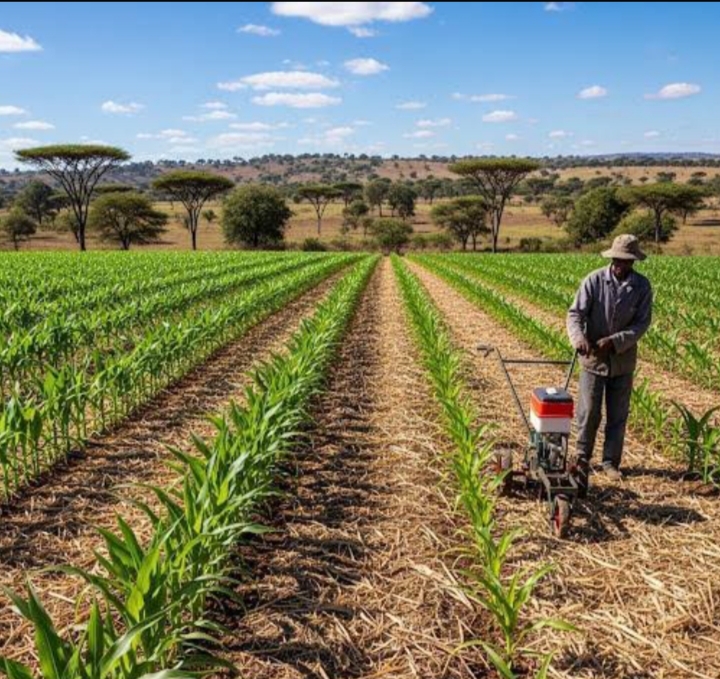
Conservation agriculture (CA) has become a key approach in promoting sustainable farming in tropical regions, offering strategies that maintain productivity while protecting natural resources. Tropical climates often present challenges such as intense rainfall, soil erosion, and nutrient depletion, and CA provides practical solutions to support long term agricultural sustainability.
Core Principles of Conservation Agriculture
CA is based on three fundamental principles: minimal soil disturbance, permanent soil cover, and crop rotation. Minimizing soil disturbance through reduced or no-tillage methods helps preserve soil structure and prevent erosion. Keeping the soil covered with mulches or cover crops protects it from heavy rains, suppresses weeds, and retains moisture. Crop rotation and diversification improve soil fertility, reduce pest and disease risks, and enhance resilience to climate fluctuations.
Advantages for Tropical Farming
Implementing CA in tropical areas offers numerous benefits:
- Enhanced Soil Health: Conserving organic matter and preventing erosion improves nutrient retention and fertility.
- Water Efficiency: Mulches and cover crops reduce evaporation and increase water infiltration, important in regions prone to drought or heavy rainfall.
- Climate Adaptation: CA systems can buffer crops against extreme weather events typical of tropical zones.
- Sustainable Yields: Proper soil and resource management often leads to more stable and higher crop yields over time.
Practices Commonly Used
Farmers in tropical regions apply several CA techniques, including:
- No-Till or Reduced Tillage: Minimizing soil disturbance to maintain structure.
- Mulching: Covering soil with crop residues or organic matter to protect it.
- Legume Integration: Including nitrogen-fixing crops in rotations to enrich soil fertility.
- Intercropping: Growing multiple crops together to increase biodiversity and reduce pest pressures.
Challenges to Adoption
Despite its benefits, CA faces several adoption barriers in tropical agriculture:
- Knowledge Gaps: Many farmers lack training or awareness of CA methods.
- Initial Costs: Equipment for no-till farming and seeds for cover crops can be expensive.
- Pest and Weed Management: Reduced tillage requires alternative strategies to manage weeds and pests.
- Socioeconomic Limitations: Smallholder farmers may have limited access to credit, markets, or extension services.
Future Outlook
With improved technology, better extension services, and supportive government policies, CA adoption in tropical regions is expanding. Research on integrating CA with agroforestry and precision farming practices offers potential for maximizing its benefits. Combining local knowledge with modern innovations can create resilient and productive tropical farming systems.
Conservation agriculture provides a sustainable approach for tropical farming, addressing issues such as soil degradation, climate variability, and resource limitations. By focusing on soil health, water management, and crop diversification, CA promotes productivity while protecting the environment. Wider adoption of these practices can help tropical farmers achieve more sustainable and resilient agricultural systems.