
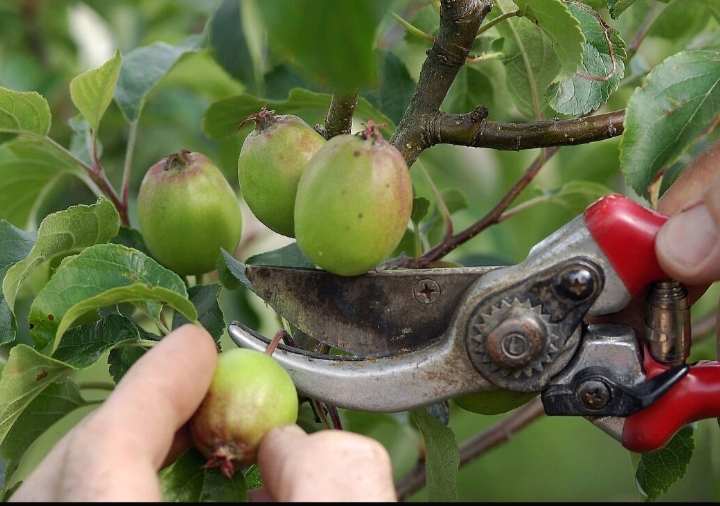
Fruit trees usually produce a large number of flowers that later develop into fruits. However, when too many fruits grow on a tree, they compete for nutrients, sunlight, and water. This often leads to smaller fruits and may even damage the tree’s branches. Fruit thinning is a farming technique used to remove some young fruits so that the remaining ones can grow healthier and larger. This practice helps improve fruit quality and maintains the overall health of the tree.
Understanding Fruit Thinning
Fruit thinning refers to the removal of excess fruits from a tree during the early stages of development. By reducing the number of fruits, the tree can concentrate its energy on a smaller number, allowing them to develop better size, color, and flavor. This technique is commonly applied to fruit trees such as Apple, Peach, Pear, and Plum.
Reasons for Fruit Thinning
- Better Fruit Size and Quality
When too many fruits grow together, they compete for the same nutrients. Removing some of them ensures that the remaining fruits receive adequate nourishment, resulting in larger and better-quality produce.
- Protects Tree Branches
Branches can become overloaded when a tree carries too many fruits. This extra weight may cause branches to bend or break. Thinning reduces the load and helps maintain the tree’s structure.
- Promotes Consistent Production
Some fruit trees produce a very large crop one year and a smaller crop the following year. This condition is known as Alternate bearing. Thinning helps balance the tree’s energy use and encourages more regular fruit production each season.
- Enhances Airflow and Sunlight
Removing excess fruits creates space within the tree canopy. This allows better air movement and sunlight penetration, which helps reduce the chances of diseases and pest problems.
Methods of Fruit Thinning
1.Hand Thinning
Hand thinning is the most widely used method. Farmers or gardeners manually remove extra fruits, leaving only the healthiest ones. The remaining fruits are usually spaced several inches apart to allow proper growth.
2.Using Tools
In some cases, small pruning scissors or similar tools are used to remove fruits, especially when dealing with clusters that are difficult to separate by hand.
3.Natural Thinning
Fruit trees sometimes shed some of their young fruits naturally in a process called “June drop.” Although this natural process helps reduce overcrowding, additional thinning may still be needed for the best results.
When to Thin Fruits
The best time to thin fruits is shortly after flowering, when the fruits are still small. Performing thinning at this early stage allows the remaining fruits to benefit from nutrients and resources during the entire growing period.
Conclusion
Fruit thinning is an important practice for maintaining productive and healthy fruit trees. By reducing the number of fruits on a tree, growers can improve fruit size and quality, prevent branch damage, and encourage regular harvests. When carried out properly, fruit thinning leads to stronger trees and more successful yields each season.