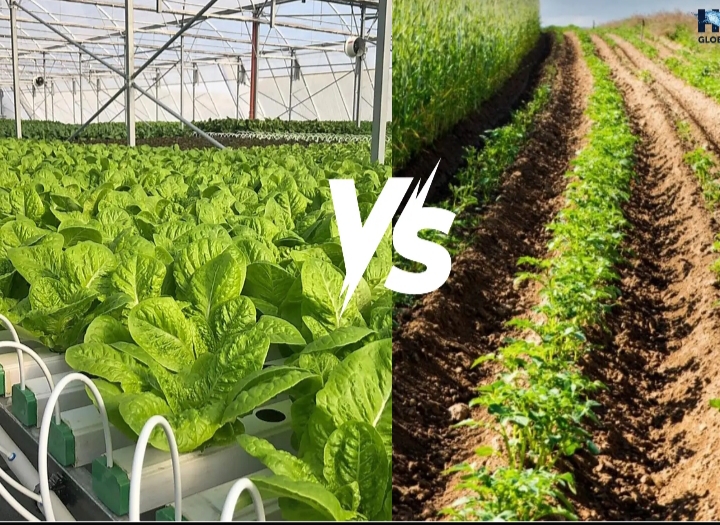
As the demand for food continues to grow and agricultural land becomes increasingly limited, farmers are exploring alternative production methods that are both efficient and sustainable. Two widely discussed approaches are hydroponics and soil-based organic farming. Although both aim to produce healthy crops, they differ greatly in their techniques, costs, environmental impact, and management requirement.
Hydroponics: Growing Without Soil
Hydroponics is a method of cultivating plants in a nutrient-enriched water solution rather than in soil. Plants are usually supported by inert materials such as coco peat, perlite, or rockwool. This system is commonly practiced in greenhouses, controlled environments, and vertical farms.
One major advantage of hydroponics is rapid plant growth. Because nutrients are delivered directly to the roots, crops often mature faster and can produce higher yields. The system also uses water efficiently, as water is recirculated instead of being lost through runoff or deep soil absorption. Additionally, hydroponics requires less space, making it suitable for urban areas or regions with limited farmland. Since there is no soil involved, the risk of soil-borne diseases is significantly reduced.
However, hydroponics comes with certain challenges. The initial setup cost can be high due to the need for specialized equipment such as pumps, lighting systems, and climate controls. Successful operation requires technical knowledge to monitor nutrient concentrations, pH levels, and water quality. Many systems also depend heavily on electricity, which increases operational costs and environmental concerns. Furthermore, any mechanical failure or power interruption can quickly damage crops because plants rely entirely on the controlled system.
Soil-Based Organic Farming: Working with Nature
Soil-based organic farming relies on natural soil fertility and ecological processes rather than synthetic chemicals. Farmers use compost, crop rotation, biological pest control, and organic fertilizers to maintain soil health and productivity.This approach offers several environmental benefits. It enhances soil structure, promotes biodiversity, and encourages beneficial microorganisms.
Organic farming typically requires less artificial energy input since it depends on natural sunlight and seasonal patterns. Consumer demand for organic produce is also strong, often allowing farmers to receive higher market prices. Over time, this method improves soil quality and supports sustainable land use.
Despite its benefits, soil-based organic farming has limitations. Crop growth may be slower compared to hydroponic systems, and yields can vary depending on weather conditions such as droughts or heavy rainfall. This method also requires more land area than intensive indoor systems. Managing pests and weeds without synthetic chemicals can be labor-intensive and may require additional time and expertise.
Choosing the Right Approach
There is no universal answer as to which method is superior. The best choice depends on available resources, climate conditions, financial capacity, and production goals. Hydroponics is well suited for controlled environments, urban farming, and high-yield commercial operations. In contrast, soil-based organic farming is ideal for those focused on environmental sustainability, soil conservation, and natural farming practices.In some cases, farmers combine elements of both systems to balance productivity and sustainability.
Hydroponics and soil-based organic farming represent two different paths in modern agriculture. Hydroponics emphasizes efficiency, precision, and space optimization, while organic soil farming prioritizes ecological balance and long-term soil health. Understanding the advantages and drawbacks of each system enables farmers to choose the method that aligns best with their objectives and environmental values.