
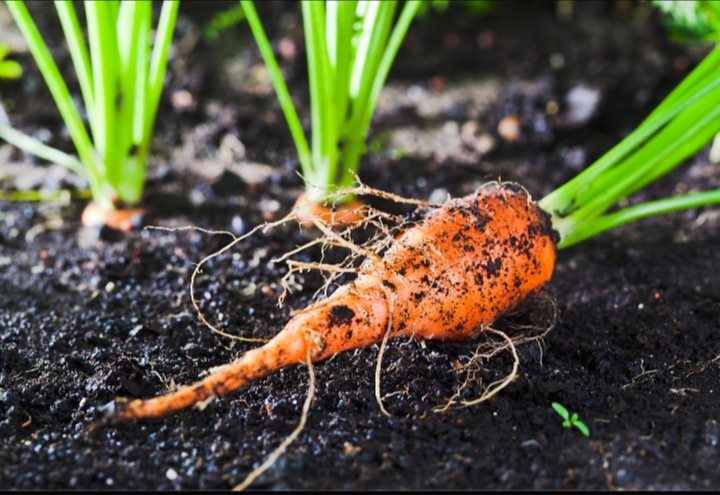
Growing carrots organically means focusing on soil health, balanced nutrition, and natural pest control. With proper care, you can harvest sweet, straight, and chemical-free roots.
Choose Suitable Varieties
Select carrot types based on your soil depth and texture. Long varieties grow best in deep, loose soil, while shorter types are better for shallow or heavier soils.
Prepare Loose, Fertile Soil
Carrots thrive in well-drained, stone-free soil enriched with mature compost. Maintain a slightly acidic to neutral pH (6.0–6.8) and avoid fresh manure, which can cause root deformities.
Maintain Even Moisture
Keep the soil consistently moist during germination and root development. Mulching helps conserve water and prevent cracking caused by irregular watering.
Provide Adequate Sunlight
Ensure 6–8 hours of sunlight daily. In hot climates, light shade can reduce plant stress.
Use Natural Fertilizers
Apply compost tea or organic phosphorus sources to encourage root growth. Avoid excess nitrogen, which promotes leafy tops instead of strong roots.
Control Pests Organically
Use row covers to protect against carrot flies, rotate crops yearly, and plant companion crops like onions or garlic. Neem oil can help manage aphids naturally.
Thin and Space Properly
Thin seedlings early to prevent overcrowding, allowing roots enough room to grow straight and full-sized.
Harvest on Time
Most carrots mature in 2–3 months. Harvest when roots reach the desired size and store them in cool, humid conditions.
successful organic carrot cultivation depends on healthy soil, steady watering, proper spacing, natural fertilization, and preventive pest management