
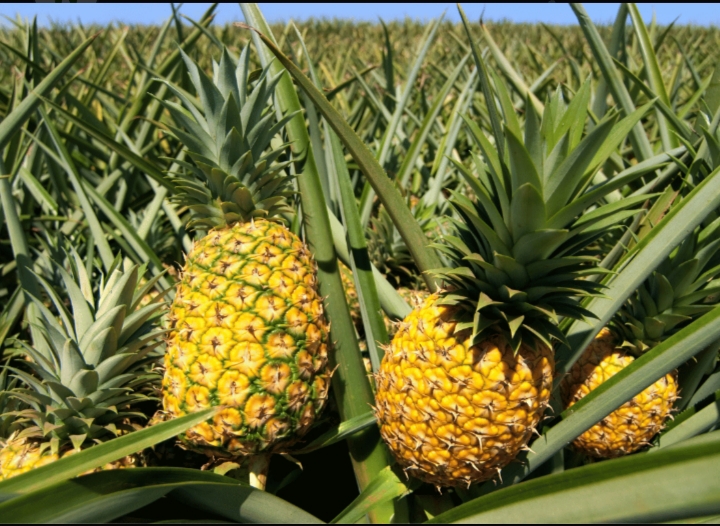
Pineapple farming can be a profitable enterprise for small scale farmers when proper production practices are followed. With good crop management, careful planning, and efficient use of small land areas, farmers can achieve high yields and steady income.
- Overview of Pineapple
Pineapple (Ananas comosus) is a tropical fruit crop well suited to warm climates. It tolerates dry conditions better than many fruit crops and can perform well even on less fertile soils.
Suitable Growing Conditions
1.Temperature: 18°C–32°C
2.Annual Rainfall: 1,000–1,500 mm (evenly distributed)
3.Soil Type: Well-drained sandy loam
4.Soil pH: 4.5–6.5
5.Light Requirement: Full sunlight
Poor drainage should be avoided because excess moisture can lead to root diseases.
- Field Preparation
- Proper land preparation promotes strong root growth and healthy plants.
- Remove bushes and weeds from the field.
- Loosen the soil through digging or ploughing.
- Form raised beds or ridges in high rainfall areas.
- Mix organic manure or compost into the soil before planting.
Small scale farmers can effectively prepare land using basic hand tools.
- Propagation Materials
Pineapple is grown using vegetative parts rather than seeds. The main planting materials include:
- Suckers (most recommended)
- Slips
- Crowns
Suckers are preferred because they establish quickly and produce fruits earlier, usually within 12–18 months.
Selection Guidelines
1.Use healthy, pest and disease free materials.
2.Choose uniform sizes for consistent growth.
3.Allow freshly cut materials to dry for 1–2 days before planting to reduce rotting.
- Planting Practices
Spacing Recommendations
- 60 cm between rows
- 30–45 cm between plants
This spacing can accommodate approximately 40,000–50,000 plants per hectare under intensive production.
Planting Procedure
Plant at the beginning of the rainy season.
Place the sucker 5–8 cm deep in the soil.
Firm the soil around the plant base.
Applying mulch helps retain soil moisture and reduce weed growth.
- Fertility Management
Pineapple responds positively to proper nutrient supply.
Organic Inputs
Apply compost or well-decomposed manure before planting.
Use organic mulch to gradually enrich the soil.
Chemical Fertilizers
Apply nitrogen fertilizers in split applications.
Add potassium to improve fruit size and sweetness.
Soil testing is recommended to determine the right fertilizer rates.
- Weed, Pest, and Disease Management
Weed Control
Carry out manual weeding regularly.
Use mulching to minimize weed competition.
Major Pests
- Mealybugs
- Nematodes
- Common Diseases
- Heart rot
- Root rot
Using clean planting materials and ensuring proper drainage are key preventive measures. Integrated pest management strategies help reduce excessive chemical use.
- Flower Induction
Farmers may induce flowering 10–12 months after planting using approved substances. This practice helps ensure uniform fruit development and synchronized harvesting.
- Harvesting
Pineapples are generally harvested:
5–6 months after flowering
12–18 months after planting
Indicators of Maturity
Yellow coloration starting at the base
Fully developed fruit eyes
Noticeable sweet fragrance
Harvest fruits carefully with a knife to avoid damage.
- Post-Harvest Practices
Handle fruits gently to prevent bruising.
Keep harvested fruits in a cool, shaded place.
Sort fruits according to size and quality.
Market produce promptly to minimize losses.
Processing into juice, dried slices, or jam can enhance income.
Conclusion
Pineapple cultivation offers small-scale farmers a viable income-generating opportunity due to its adaptability and market demand. By adopting proper planting methods, maintaining soil fertility, and implementing effective pest and weed control practices, farmers can increase productivity and profitability. With sound management, pineapple farming can become a sustainable and rewarding agricultural venture.