
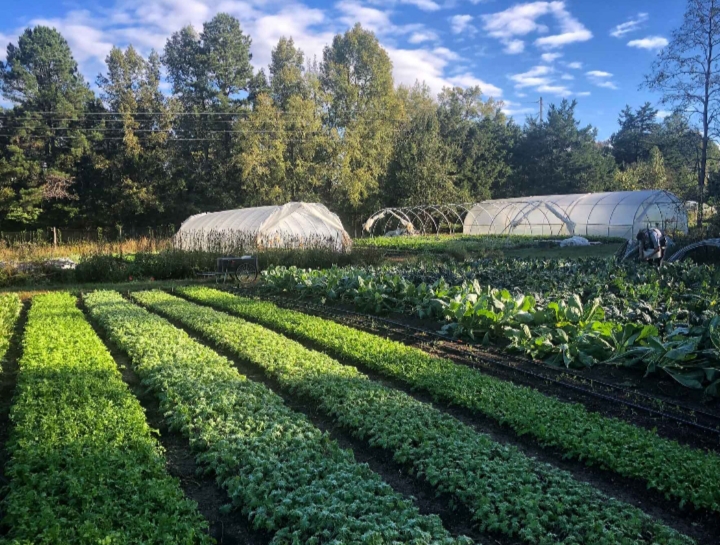
Climate change, driven by rising levels of greenhouse gases (GHGs) such as carbon dioxide (CO₂), methane (CH₄), and nitrous oxide (N₂O), is one of the biggest global challenges today. Agriculture contributes significantly to these emissions, with conventional farming responsible for around 10–12% of global GHGs. Organic farming, which focuses on sustainable practices, has emerged as an effective way to lower agriculture’s carbon footprint while protecting the environment.
What Is Organic Farming?
Organic farming avoids synthetic fertilizers, chemical pesticides, and genetically modified organisms (GMOs). It relies on natural methods, including composting, green manure, crop rotation, and biological pest control. By emphasizing soil health, biodiversity, and ecological balance, organic farming can help mitigate climate change in multiple ways.
Ways Organic Farming Reduces Greenhouse Gases
1.Increasing Soil Carbon Storage
Healthy soil acts as a carbon sink. Techniques like cover cropping, compost addition, and reduced tillage increase organic matter in the soil, allowing it to capture more CO₂ from the atmosphere. Research shows that organic soils can store approximately 0.3–0.6 tons of carbon per hectare annually.
2.Lowering Nitrous Oxide Emissions
Nitrous oxide, a potent greenhouse gas, is mostly produced from synthetic nitrogen fertilizers. Organic farms replace these with compost, manure, or nitrogen-fixing plants, which release nitrogen gradually and reduce N₂O emissions.
3.Reducing Methane Emissions
Methane mainly comes from livestock and rice paddies. Organic livestock systems often use pasture based grazing, which decreases methane production. Organic rice farming uses water management strategies to limit the anaerobic conditions that produce CH₄.
4.Decreasing Energy Use
Conventional farming relies heavily on fossil fuel based fertilizers and pesticides. By cutting down on these inputs, organic farming indirectly reduces CO₂ emissions from their production, transport, and application.
Additional Environmental Advantages
Organic farming also supports biodiversity, improves soil water retention, and reduces chemical runoff, making ecosystems more resilient to climate change.
Some challenges
Organic farming faces challenges such as generally lower yields compared to conventional methods, potentially requiring more land to produce the same amount of food. Transitioning to organic systems demands time, labor, and knowledge, and government support is essential to scale up adoption.
Organic farming offers a practical solution to reduce greenhouse gas emissions while promoting soil health and ecological sustainability. By sequestering carbon, reducing reliance on synthetic fertilizers, and supporting sustainable crop and livestock practices, it can play a key role in combating climate change. Encouraging wider adoption through education and policy incentives can help achieve a greener, low carbon future.