
Introduction
Agriculture remains the backbone of Nigeria’s economy, employing millions and contributing significantly to food security. However, crop productivity in Nigeria is closely tied to seasonal rainfall patterns, which vary across the country’s agro-ecological zones. To maximize yields, farmers rely on seasonal crop calendars—guides that indicate the optimal planting, growing, and harvesting periods for different crops in specific regions.
By aligning agricultural practices with Nigeria’s diverse climate zones, seasonal crop calendars help smallholder farmers reduce risks, plan labor and input use, and improve food supply throughout the year.
1. Nigeria’s Agro-Ecological Zones
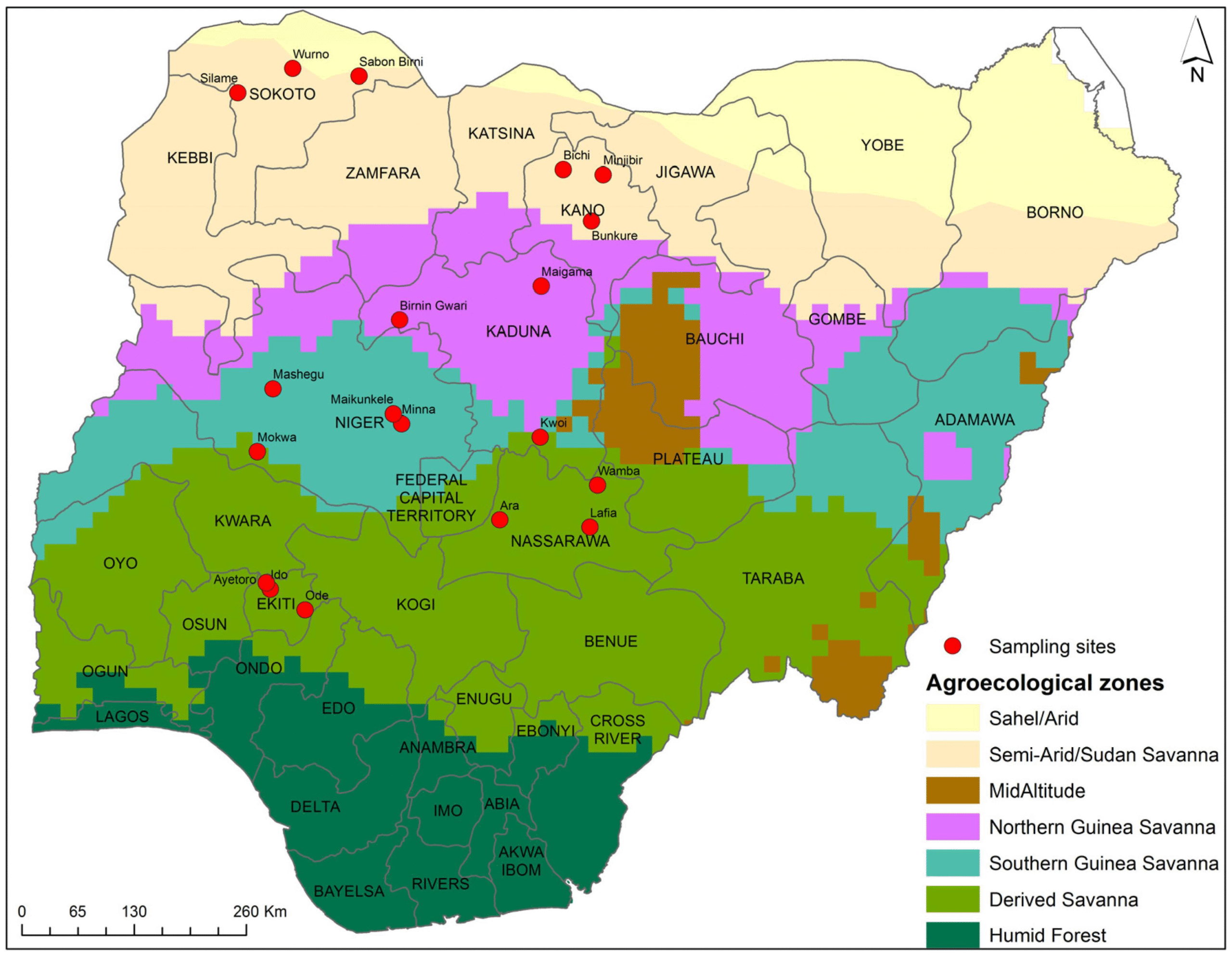
Nigeria is divided into six major agro-ecological zones, each with distinct rainfall, temperature, and soil characteristics. These determine what crops can thrive and when.
- Sahel/Sudan Savannah (Extreme North)
- Rainfall: 300–600 mm/year
- Short rainy season (June–September)
- Key crops: millet, sorghum, cowpea, groundnut
- Northern Guinea Savannah
- Rainfall: 600–1,200 mm/year
- Growing season: May–October
- Key crops: maize, sorghum, soybean, yam, cotton
- Southern Guinea Savannah
- Rainfall: 1,000–1,500 mm/year
- Longer rainy season: April–October
- Key crops: yam, cassava, maize, soybean, rice
- Derived Savannah
- Rainfall: 1,200–1,800 mm/year
- Double-cropping possible in many areas
- Key crops: cassava, yam, maize, vegetables, plantain
- Humid Forest (South-East & South-South)
- Rainfall: 1,500–3,000 mm/year
- Rainy season: March–November, with short August break
- Key crops: cassava, yam, rice, oil palm, cocoa, banana
- Coastal Mangrove/Swamp
- Rainfall: 2,000–4,000 mm/year
- Waterlogged soils, year-round rainfall
- Key crops: rice (flooded), fish farming, vegetables on raised beds
2. Seasonal Crop Calendar Breakdown
a. Northern Zones (Sahel & Sudan Savannah)
- Planting season: June–July (onset of rains)
- Harvest: September–October before dry season
- Crops:
- Millet & sorghum → plant June, harvest Sept/Oct
- Groundnut → plant June, harvest Sept
- Cowpea → plant July, harvest Sept
- Wheat → dry season crop (Nov–Feb, with irrigation)
b. Northern Guinea Savannah
- Planting season: May–June
- Harvest: Sept–Oct
- Crops:
- Maize → plant May, harvest Aug/Sept
- Sorghum → plant June, harvest Oct
- Soybean → plant June, harvest Sept
- Yam → setts planted in April/May, harvested Nov/Dec
- Cotton → plant May, harvest Nov
c. Southern Guinea Savannah
- Planting season: April–May
- Harvest: Sept–Nov
- Crops:
- Cassava → plant Apr–May, harvest year-round after 9–12 months
- Yam → plant Mar–Apr, harvest Nov–Dec
- Maize → 1st season (Apr–Jul), 2nd season (Aug–Nov in some areas)
- Rice (upland) → plant Apr, harvest Aug
d. Derived Savannah
- Planting season: March–April
- Harvest: Aug–Dec
- Crops:
- Cassava → plant Apr, harvest next year
- Maize → early maize (Mar–Jul), late maize (Aug–Nov)
- Vegetables (tomatoes, okra, pepper) → multiple cycles, peak rainy planting in Mar/Apr
- Plantain → planted all year, peaks during rainy season
e. Humid Forest Zone
- Planting season: March–June (major season), Sept–Oct (minor season after August break)
- Harvest: July–Sept (major), Dec–Jan (minor)
- Crops:
- Cassava → year-round planting, harvest after 12 months
- Yam → plant Feb–Mar, harvest Nov–Dec
- Rice (lowland) → plant Apr, harvest Aug/Sept
- Oil palm & cocoa → perennial, harvest all year with peaks in dry season
- Banana & plantain → continuous planting, 9–12 months to harvest
f. Coastal Mangrove/Swamp
- Planting season: March–June (rain-fed rice), dry-season rice under irrigation (Nov–Feb)
- Crops:
- Rice → major season Apr–Aug, minor season Oct–Feb (irrigated)
- Vegetables → grown year-round on raised beds
- Fish farming & integrated aquaculture common in wetlands
3. The Role of Crop Calendars in Farming
- Guides timely planting: Helps farmers align crops with rainfall.
- Reduces risk: Minimizes crop failure due to early or late rains.
- Supports double cropping: Especially in humid zones with bimodal rainfall.
- Facilitates input planning: Farmers know when to purchase seeds, fertilizer, and labor.
- Strengthens markets: Predictable harvests improve food supply chains.
4. Challenges in Using Crop Calendars
- Climate change: Shifting rainfall patterns make traditional calendars less reliable.
- Limited awareness: Many smallholders lack access to updated calendars.
- Infrastructure gaps: Poor irrigation limits flexibility in dry zones.
- Regional variability: Even within zones, local microclimates differ.
5. Innovations for the Future
- Digital crop calendars: Mobile apps providing localized planting guides.
- Climate-smart calendars: Adjusted annually with weather forecasts.
- Integration with extension services: Community training on adapting planting dates.
- Use of irrigation and water harvesting: Expanding dry-season farming.
Conclusion
Seasonal crop calendars remain a vital tool for Nigerian agriculture, enabling farmers to synchronize planting and harvesting with ecological realities. By tailoring calendars to Nigeria’s diverse zones—from the dry Sahel to the humid coastal swamps—farmers can optimize yields, reduce losses, and strengthen food security. With climate change posing new uncertainties, updated and digitalized calendars that integrate weather forecasts will be key to sustaining Nigeria’s smallholder-driven agricultural future.