
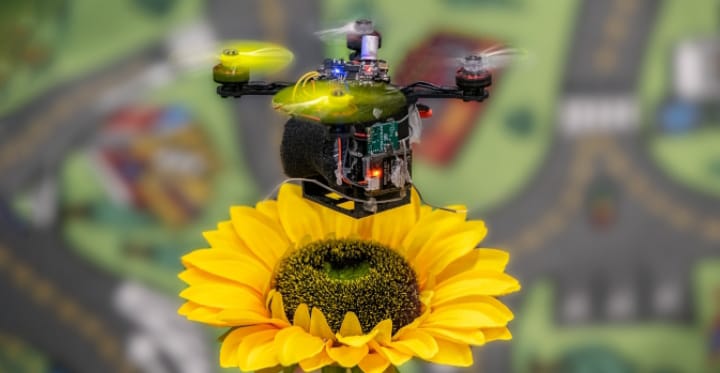
Pollination plays a crucial role in global food production, aiding the reproduction of many crops such as fruits, vegetables, and seeds. Traditionally, this process has relied on natural pollinators like bees, butterflies, and other insects. However, with declining pollinator populations due to various environmental challenges, researchers are turning to technology for alternative solutions. One promising approach is swarm robotics the use of multiple small robots working together to perform tasks like pollination. This article explores the potential of swarm robotics in crop pollination, its benefits, and challenges.
The Pollination Problem
Many crops rely heavily on insect pollination, with species such as almonds, apples, and berries being particularly dependent on it. Managed honeybees (Apis mellifera) are commonly used in agriculture, but their populations are facing significant declines because of habitat loss, pesticide exposure, disease, and climate change.
As a result, there is growing interest in robotic alternatives that could support or replace natural pollinators in certain agricultural contexts.
What Is Swarm Robotics?
Swarm robotics takes inspiration from the behavior of social insects like ants and bees. Instead of using one large, complex robot, this system utilizes a network of small, simple robots that work together to accomplish tasks in a decentralized way.
The key features of swarm robotics include:
- Self organization: Robots operate autonomously without a central control system.
- Scalability: The system works with varying numbers of robots.
- Robustness: The system can still function if some robots fail.
- Distributed intelligence: Each robot follows simple instructions that collectively produce complex results.
For pollination, swarm robots could navigate crop fields, locate flowers, and effectively transfer pollen across wide areas.
How Robotic Pollination Works
Swarm robots used for pollination generally include:
1.Miniature drones with cameras and sensors
2.AI to identify flowers
3.Adhesive or electrostatic materials to collect and deposit pollen
4.Navigation systems using GPS, computer vision, or mapping technologies
Some systems use small drones that hover near flowers, applying pollen with soft brushes or gel coated surfaces. These robots are coordinated through algorithms to ensure efficient coverage without redundancy or collisions.
Notable research in this area includes work by institutions like Harvard University, which has explored micro robotic systems, and companies like Walmart, which have patented robotic pollination technologies.
Benefits of Swarm Robotic Pollination
- Precision and Efficiency
Swarm robots can target specific crops at the right time in their flowering cycle, improving the precision of pollination and ensuring more consistent yields.
- Resilience to Environmental Factors
Unlike natural pollinators, robots aren’t impacted by issues like disease or habitat destruction. They can work in controlled environments, such as greenhouses, where traditional pollinators may struggle.
- Data Collection
Robotic pollinators can gather valuable data while performing their task, such as monitoring plant health, flowering rates, and environmental conditions, providing farmers with important insights.
- Reducing Pollinator Transport
Transporting bee colonies over long distances for pollination is expensive and logistically complex. Swarm robotics could reduce these costs and simplify the process.
Challenges and Limitations
Despite its promise, the use of swarm robots in pollination faces several challenges:
1.High Costs: The development of advanced robotics and AI is still expensive.
2.Limited Energy: Small drones are constrained by short battery life.
3.Complex Coordination: Managing large swarms requires advanced algorithms to prevent collisions and ensure efficient coverage.
4.Environmental Impact: Large scale use of robotic pollinators must be carefully managed to avoid disrupting natural ecosystems.
Additionally, robotic pollination is unlikely to fully replace natural pollinators in the near future, as bees and other pollinators contribute to biodiversity in ways that robots cannot replicate.
Integration with Natural Pollinators
Rather than replacing bees, swarm robots can complement natural pollinators. They could be used in scenarios such as:
- Pollination during times when bee activity is low
- Operations in greenhouses or other enclosed environments
- Supporting pollination in areas experiencing severe pollinator shortages
This combined approach could help safeguard food production while protecting natural ecosystems.
As technology advances, especially in AI, battery life, and lightweight materials, swarm robotics for pollination will likely become more efficient and affordable. While it may never fully replace natural pollinators, robotic systems could become an important tool for improving crop yields and food security, especially in areas affected by pollinator decline.
Ultimately, the goal is to create a resilient agricultural system that combines both natural and technological solutions, with swarm robotics playing a key role in ensuring reliable crop pollination in the future.