
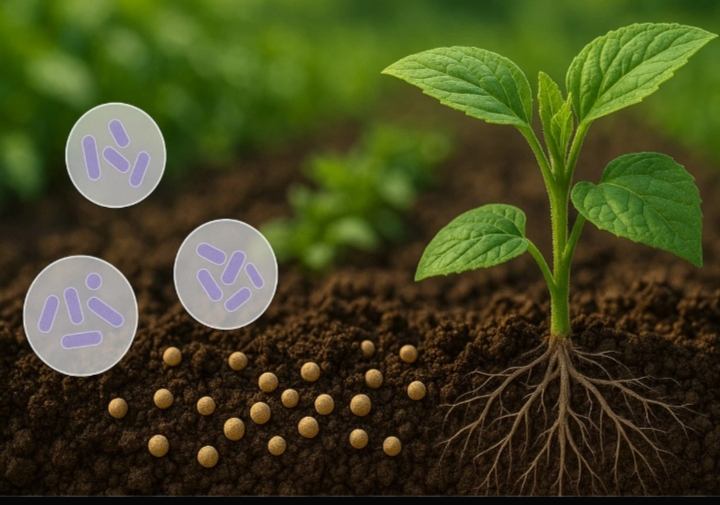
Agricultural soils are complex ecosystems, home to a wide variety of microorganisms that play essential roles in plant growth, nutrient cycling, and maintaining soil health. A relatively new and debated concept in this field is that of nanoparasites tiny, potentially harmful particles or organisms that could impact soil systems. While the term isn’t widely accepted in mainstream science, it is often used to describe ultra small parasites or pathogenic agents that could influence biological processes in the soil. This article explores the potential role of these particles, the debate surrounding their existence, and their possible impact on agriculture.
What Are Nanoparasites?
The term “nanoparasites” isn’t officially recognized in microbiological classifications. Some interpretations suggest they could be related to nanobacteria, minuscule entities once thought to be the smallest form of life. Despite earlier claims, most scientists now consider these particles to be mineral-protein complexes rather than living organisms.
In the context of agriculture, nanoparasites may refer to:
- Extremely small pathogenic organisms
- Engineered nanoparticles interacting with soil life
- Nano-scale protein and mineral complexes
- Potential plant or soil-based infectious agents
Although there’s no definitive proof that these particles are living organisms, research into nano scale biological interactions is gaining momentum.
Potential Effects on Soil Health
If nanoparasites did exist in agricultural soils, they might have several impacts on soil ecosystems:
- Disruption of Soil Microbial Communities
Healthy soil depends on beneficial microbes, like nitrogen-fixing bacteria and fungi. Nano-scale pathogens could potentially:
- Disrupt microbial metabolism
- Compete for available nutrients
- Trigger plant immune responses
Such effects could harm soil fertility and disrupt nutrient cycles.
- Impact on Plant Roots
Plants rely on a complex microbiome in their roots. Nanoparasites might:
- Penetrate root tissues
- Interfere with plant signaling
- Suppress plant immunity
However, there’s no current evidence to support the idea that nanoparasites are plant pathogens. Known plant pathogens that are nano scale tend to be viruses, which are already well documented.
Nanotechnology and Soil Systems
While the concept of natural nanoparasites is still hypothetical, engineered nanoparticles are increasingly used in agriculture. These include:
- Nano enhanced fertilizers
- Nano pesticides
- Soil remediation tools
Studies show that certain nanoparticles, such as silver nanoparticles, can inhibit microbial activity, while others help in more efficient nutrient delivery.
So, while living nanoparasites may not be a real concern, nano scale materials certainly affect soil ecosystems and warrant further research.
Ecological and Agricultural Consequences
If nanoparasites were confirmed, they could have several negative effects on agriculture, including:
- Lower crop yields
- Disruption of nutrient cycling
- Increased vulnerability to diseases
- Altered soil biodiversity
On the flip side, understanding nano-scale interactions could lead to breakthroughs like:
- More precise microbial control
- Better-targeted soil treatments
- Enhanced plant disease detection
The broader study of soil microbiomes is increasingly looking at the role of ultra-small bacteria and viruses, and future research might help clarify whether these tiny life forms are indeed present.
The concept of nano parasites in agricultural soils lies at the crossroads of microbiology, nanotechnology, and environmental science. While it’s not yet proven that these tiny organisms exist, it’s clear that nano scale biological and chemical interactions play a role in soil systems.
What is certain is that the soil microbiome, including nano scale entities, is a much more complex and intricate environment than we previously thought. Research into these nano scale processes could lead to a deeper understanding of how the smallest entities affect agriculture and environmental sustainability.
As technology advances, we may uncover new insights into how invisible particles influence the health of agricultural soils and shape the future of farming practices.