
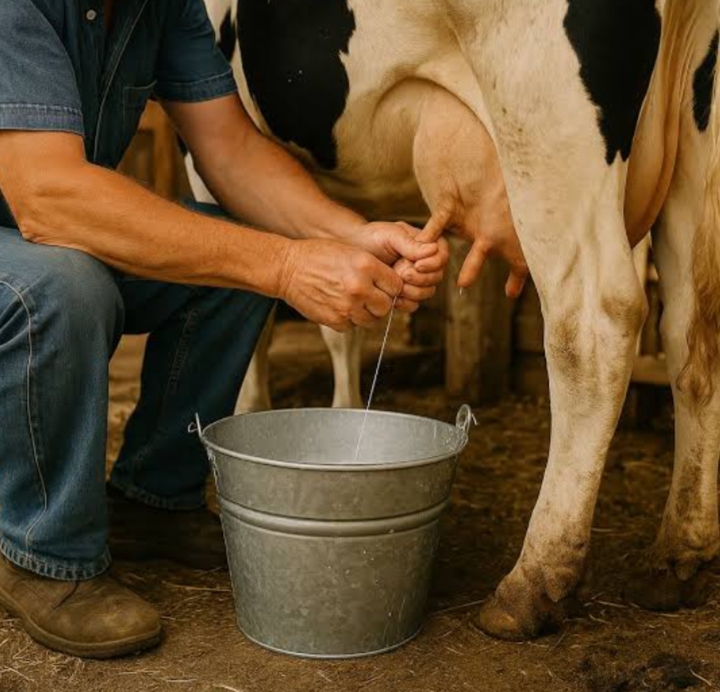
Milking hygiene plays a vital role in dairy farming, as it directly influences the quality of milk, the health of the animals, and the safety of consumers. Milk can easily become contaminated at different stages of the milking process, starting from the udder to the collection container. Therefore, maintaining proper hygiene is essential to prevent diseases like mastitis in cows and to ensure that the milk remains clean and safe for use.
1. Preparation Before Milking
Proper hygiene begins with preparing the milking environment. The area should be kept clean, dry, and well-aired to minimize contamination. Dirt, manure, and standing water should be removed regularly.
The person carrying out the milking must also observe good personal cleanliness. Hands should be washed thoroughly with soap and clean water, fingernails kept short, and clean clothing or protective wear used when possible. This helps reduce the transfer of harmful microorganisms into the milk.
2. Cleaning the Udder and Teats
Although the udder produces milk, it can also carry dirt and bacteria. Before milking, it should be washed with clean, preferably warm water, and then dried with a clean towel. It is best to use separate towels for each cow to avoid spreading infections.
Teats should be carefully cleaned and disinfected using an approved solution before milking. The first few squirts of milk should be discarded, as they often contain more bacteria than the rest.
3. Milking Procedure
Milking should be carried out gently and consistently to keep the animal relaxed. Stress can interfere with milk flow and increase contamination risks. In hand milking, the full-hand method is preferred over pulling the teat to prevent injury. Clean hands must be maintained throughout the process.
When using milking machines, all equipment must be properly cleaned and sanitized before and after use. Components such as rubber parts should be checked regularly for damage. It is also important to avoid actions like talking, coughing, or sneezing over the milk during milking.
4. Milk Handling and Storage
After milking, the milk should be strained using a clean cloth or filter to remove visible particles. Containers used for collection should be made from safe materials like stainless steel or aluminum and must be properly cleaned and dried.
Milk should be cooled immediately to limit bacterial growth. Keeping it in a cool place or refrigerating it helps maintain its freshness and quality. Delayed cooling can lead to spoilage.
5. Cleaning of Equipment
All tools and equipment used in milking must be washed immediately after use. Cleaning should involve clean water, detergent, and preferably hot water. Equipment should be left to air dry in a clean area instead of being wiped with possibly contaminated materials.
Regular disinfection is also important to prevent the buildup of harmful bacteria.
6. Animal Health and Monitoring
The health of dairy animals is closely linked to milk quality. Regular health checks and quick treatment of diseases, especially mastitis, are necessary. Cows with infections should be milked separately, and their milk should not be mixed with others.
Changes in the milk’s appearance, smell, or texture should be monitored, as they may indicate health problems.
Conclusion
Ensuring proper hygiene throughout the milking process—from the udder to the bucket—is essential for producing safe and high-quality milk. Consistent cleanliness, careful handling, and routine practices help protect both animal and human health while improving the value of dairy products.