
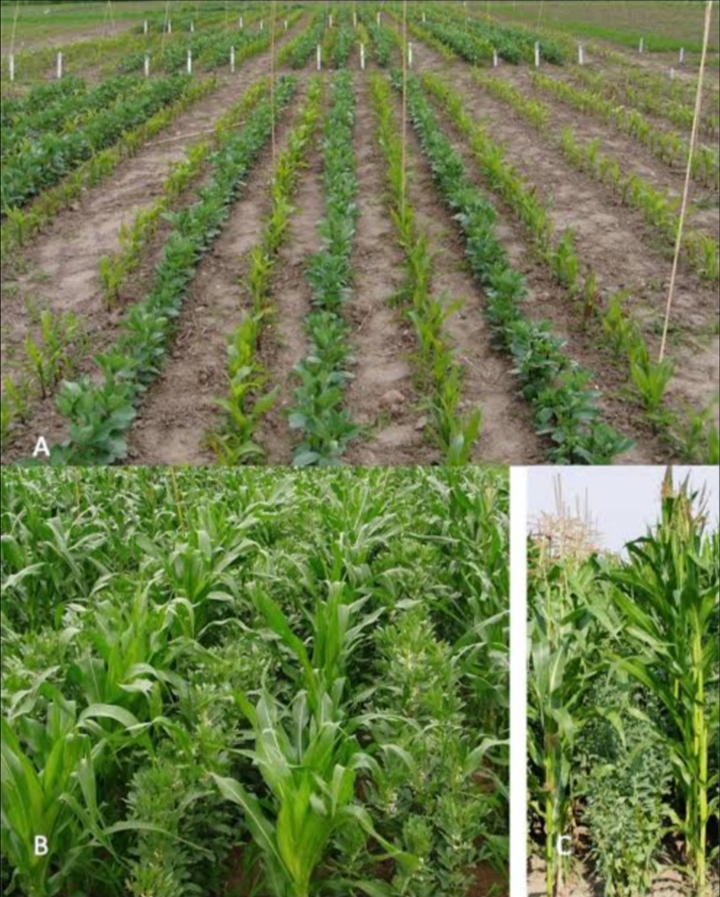
Intercropping and monocropping are two common farming systems, and they differ in how they affect productivity depending on conditions like soil type, climate, and crop choice.
Monocropping
Monocropping refers to growing a single crop on a piece of land at a time, such as maize or rice alone.
Yield outcomes
- Can produce high yields for one specific crop when conditions are well managed
- Easier to mechanize and standardize farm operations
- Fertilizers and irrigation can be tailored to one crop
Drawbacks
- Higher vulnerability to pests and diseases
- Faster soil nutrient depletion
- Greater risk if weather or market conditions affect that single crop
Overall, monocropping tends to maximize the output of one crop but may reduce long-term stability and overall farm resilience.
Intercropping
Intercropping involves growing two or more crops together on the same land, such as maize combined with legumes.
Yield outcomes
- Often leads to greater total output per unit area
- Efficiency is measured using the Land Equivalent Ratio (LER); values above 1 show better land use than monocropping
- Common LER ranges from 1.2 to 1.8, meaning intercropping can produce significantly more combined yield than growing crops separately
- Makes better use of sunlight, nutrients, and water
Advantages
- Reduces pest and disease spread
- Improves soil fertility, especially when legumes are included
- Provides multiple sources of income and food
Challenges
- More complex to manage
- Harder to mechanize
- Risk of competition between crops if poorly planned
Overall Comparison
- Monocropping: Higher yield for a single crop, but less efficient land use and higher risk exposure
- Intercropping: Higher total productivity in many cases, with improved resilience but more management complexity
Practical Context
In smallholder farming systems in Nigeria, intercropping is widely used because it improves food security, diversifies harvests, and helps maintain soil fertility. However, large-scale commercial farms often prefer monocropping due to its simplicity and compatibility with machinery.
Conclusion
Monocropping is better suited for maximizing a single crop’s output in controlled systems, while intercropping often delivers higher overall productivity and greater stability across changing conditions.