
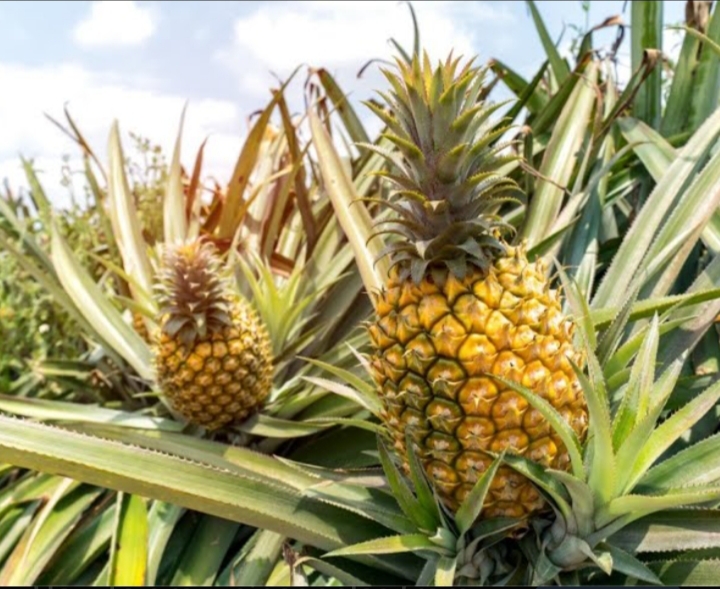
Pineapple farming is an important agricultural activity in many tropical and subtropical regions. One of the major factors that influence productivity and profitability is the type of planting material used. Farmers commonly propagate pineapples using suckers or crowns, and each method has its own advantages and limitations.
Knowing the differences between these two planting materials helps farmers make better decisions based on their farming goals, available resources, and market demands.
Pineapple Propagation Methods
Pineapples are usually propagated through vegetative means rather than seeds. Farmers grow new plants from different parts of an existing pineapple plant. The most common planting materials include:
- Suckers
- Crowns
- Slips
- Ratoons
Among these, suckers and crowns are the most frequently used.
Pineapple Suckers
Suckers are shoots that develop around the base of the pineapple plant or from the leaf axils. These shoots are removed from the parent plant and replanted to produce new crops.
Because of their vigorous growth, suckers are widely preferred in commercial pineapple production.
Features of Suckers
- Strong and healthy shoots
- Usually larger in size
- Rapid establishment after planting
- Earlier fruit production
- More uniform growth
Benefits of Planting Suckers
Quick Maturity
Plants grown from suckers generally reach maturity within 15 to 18 months, allowing farmers to harvest sooner.
Better Yield
Suckers often produce larger fruits with more consistent quality, making them suitable for commercial farming.
Stronger Growth
They establish roots faster and tolerate environmental stress better because they are already partially developed before planting.
Higher Profit Potential
The shorter production cycle and improved fruit quality usually result in better financial returns.
Drawbacks of Suckers
Limited Supply
A single pineapple plant produces only a small number of suckers, which can restrict expansion.
Expensive Planting Material
Due to their high demand and productivity, suckers are often more costly than crowns.
Possible Disease Spread
If taken from infected plants, suckers can transfer pests and diseases to new fields.
Pineapple Crowns
Crowns are the leafy tops attached to harvested pineapple fruits. After removing the fruit, the crown can be planted to grow another pineapple plant.
Crowns are commonly used by home gardeners and small-scale farmers because they are easy to obtain.
Features of Crowns
- Taken from the top of the fruit
- Smaller planting material
- Slower growth rate
- Longer time before fruiting
- Easily accessible
Advantages of Crowns
Easy Availability
Every harvested pineapple contains a crown, making them plentiful and inexpensive.
Lower Startup Cost
Farmers can reuse crowns from harvested fruits instead of purchasing new planting materials.
Suitable for Small Farms
Crowns are ideal for backyard gardening and small-scale pineapple cultivation.
Lower Risk of Some Diseases
Since crowns are separated from the lower part of the plant, they may carry fewer soil-borne diseases.
Disadvantages of Crowns
Slow Development
Crowns take more time to establish and may require 18 to 24 months before harvest.
Smaller Fruit Production
Plants propagated from crowns often produce smaller fruits compared to those grown from suckers.
Delayed Income
The extended growth period means farmers must wait longer before earning returns.
Less Efficient for Commercial Farming
Because of their slower growth and lower productivity, crowns are less suitable for large-scale commercial operations.
Comparison Between Suckers and Crowns
| Aspect | Suckers | Crowns |
|---|---|---|
| Growth Speed | Fast | Slow |
| Time to Harvest | 15–18 months | 18–24 months |
| Fruit Size | Larger | Smaller |
| Yield Uniformity | High | Moderate |
| Availability | Limited | Abundant |
| Cost | Higher | Lower |
| Commercial Use | Highly suitable | Less suitable |
| Root Formation | Rapid | Slower |
Which Is Better for Commercial Farming?
For commercial pineapple production, suckers are usually the better option. They mature earlier, produce higher yields, and generate quicker returns on investment.
Commercial growers often choose suckers because they support:
- Faster production cycles
- Uniform fruit quality
- Increased market value
- Improved profitability
Which Is Better for Small-Scale Farming?
Crowns are more suitable for smallholder farmers and home gardeners. Their low cost and easy availability make them a practical option for those with limited resources.
They are especially useful for:
- Backyard cultivation
- Small farms
- Trial production
- Farmers with low startup capital
Recommended Practices for Successful Pineapple Farming
Select Healthy Planting Materials
Always choose disease-free suckers or crowns that are healthy and undamaged.
Cure Before Planting
Allow planting materials to dry for a few days before planting to reduce fungal infections.
Prepare Suitable Soil
Pineapples grow best in:
- Well-drained soil
- Sandy loam conditions
- Slightly acidic soil with a pH of 4.5–6.5
Maintain Proper Spacing
Good spacing improves airflow and plant growth. Common spacing includes:
- 25–30 cm between plants
- 60–90 cm between rows
Control Pests and Weeds
Regular weeding and pest monitoring help reduce crop losses from insects and diseases.
Economic Perspective
Although suckers require higher initial investment, they often provide greater profits due to faster harvests and better fruit quality.
Crowns reduce startup expenses, but their slower growth can affect productivity and income generation.
Farmers should consider:
- Farm size
- Budget
- Availability of planting materials
- Market demand
- Production objectives
before selecting the most suitable propagation method.
Conclusion
Both suckers and crowns are effective planting materials for pineapple cultivation, but each serves different farming purposes. Suckers are generally preferred for commercial farming because they mature faster and produce higher-quality fruits. Crowns, however, are affordable and readily available, making them ideal for home gardens and small-scale farms.
Choosing the right planting material depends on the farmer’s goals, financial capacity, and desired production timeline. With proper management and good agricultural practices, successful pineapple farming can be achieved using either method.