
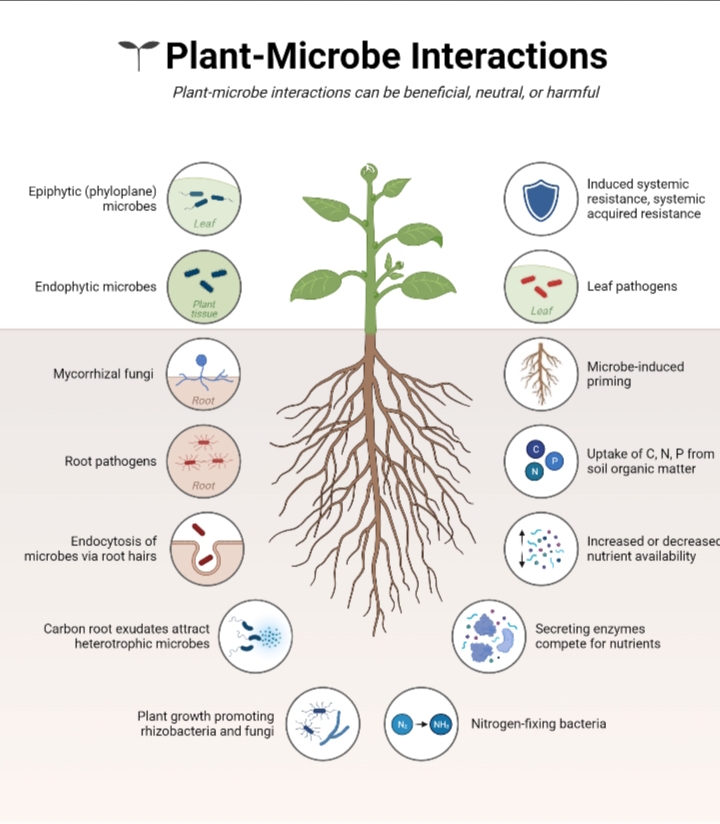
The relationship between plants and microbes is a complex and fascinating field of study. These interactions can be beneficial, neutral, or harmful, and they play a vital role in plant growth, health, and ecosystem balance. Studying these interactions is key for sustainable agriculture, environmental management, and biotechnological applications.
- Categories of Plant Microbe Interactions
Plant microbe interactions are typically grouped into three main types:
Mutualistic Relationships
Both the plant and the microbe gain benefits. Examples include:
Rhizobia and Legumes: Rhizobia bacteria form nodules on legume roots, converting atmospheric nitrogen into a form plants can use, while receiving carbohydrates from the plant.
1.Mycorrhizal Fungi: These fungi associate with plant roots, improving nutrient and water uptake in exchange for sugars.
2.Commensal Relationships
In these interactions, microbes benefit without affecting the plant. Many soil bacteria live on plant surfaces harmlessly, shaping microbial communities.
3.Pathogenic Relationships
Pathogens harm plants, causing diseases that reduce growth and crop yield. For instance, Pseudomonas syringae causes leaf spots, and Fusarium species lead to wilt diseases. Studying these interactions aids in developing disease-resistant crops.
- How Plants and Microbes Interact
Interactions are governed by molecular and biochemical signals:
Recognition and Signaling: Plants detect microbes through receptors that recognize microbial molecules. Beneficial microbes trigger symbiosis, while pathogens trigger defense mechanisms.
Gene Regulation: Both plants and microbes adjust gene expression to support their interaction. For example, legumes activate nodulation genes in response to bacterial signals.
Effector Molecules: Pathogens release proteins that suppress plant defenses to establish infection.
- Importance in Agriculture and Ecology
Understanding plant–microbe interactions has practical benefits:
1.Sustainable Farming: Using beneficial microbes reduces reliance on chemical fertilizers and pesticides.
2.Biological Pest Control: Some microbes protect plants by inhibiting harmful organisms or producing natural antibiotics.
3.Soil Health: Microbes improve soil structure, nutrient availability, and plant diversity, maintaining ecosystem stability.
- Modern Research Advances
Technologies like metagenomics, transcriptomics, and gene editing have transformed research in this field. Scientists can now study entire plant microbiomes, identify critical symbiotic genes, and develop engineered microbes to improve crop performance.
In Conclusion
Interactions between plants and microbes are fundamental to plant health, agricultural productivity, and ecosystem functioning. By exploring these relationships, researchers can create sustainable farming practices, enhance plant resilience, and unlock the potential of microbes in biotechnology. Continued research promises solutions for global food security and environmental sustainability.