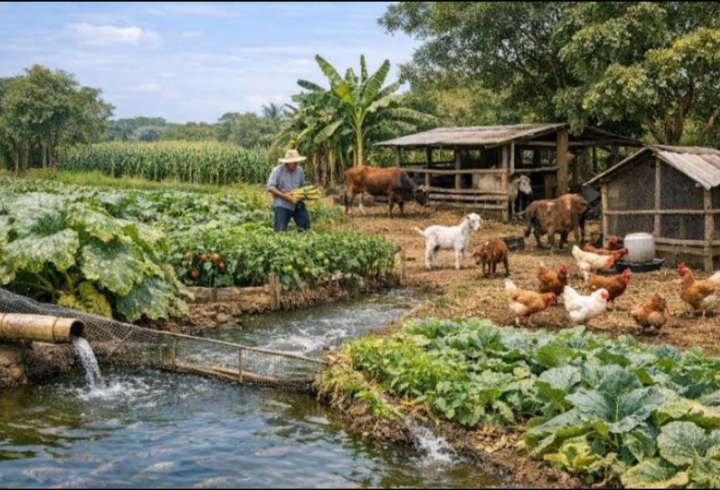
Integrated farming is an agricultural practice that brings together crop production, livestock rearing, and fish farming within one farming system. This method is aimed at improving productivity, reducing waste, and making better use of available resources. In this system, the various farming activities depend on and support one another, creating a more balanced and sustainable approach to agriculture.
In many parts of the world, especially in developing countries, integrated farming is becoming more popular because it helps farmers increase food production, earn higher income, and utilize land efficiently.
Meaning of Integrated Farming
Integrated farming refers to the combination of different agricultural enterprises on the same farm. Crops, animals, and fish are managed together so that the by-products or waste from one section can be useful in another section of the farm.
For instance, livestock waste can serve as organic fertilizer for crops or as nutrients in fish ponds. Likewise, crop residues such as leaves, bran, or stalks may be used as animal feed or fish feed. This recycling process helps lower production costs and reduces environmental waste.
Main Components of Integrated Farming
Crop Cultivation
Crop production is a major part of the integrated farming system. Farmers grow crops such as grains, vegetables, fruits, and cash crops depending on market demand and environmental conditions.
The use of animal manure and nutrient-rich pond water helps improve soil fertility naturally, reducing the dependence on artificial fertilizers.
Livestock Production
Animals such as poultry, goats, sheep, cattle, pigs, and rabbits are raised as part of the farming system. Livestock provide products like meat, eggs, milk, and manure.
Animal waste is especially valuable because it can be used to fertilize crops or enrich fish ponds, encouraging the growth of natural fish food.
Fish Farming
Fish farming, or aquaculture, involves raising fish in ponds or tanks. Common fish species used in integrated farming include catfish and tilapia.
Fish ponds benefit from organic waste from livestock and crops, while the nutrient-rich water from ponds can be used to irrigate farmland and support crop growth.
Advantages of Integrated Farming
Better Resource Utilization
Integrated farming makes effective use of available farm resources. Materials that may be considered waste in one area become useful inputs in another area.
Multiple Sources of Income
Farmers can generate earnings from crops, fish, and livestock products, reducing financial risk if one aspect of the farm performs poorly.
Improved Soil Quality
Organic manure from animals and fish ponds helps enrich the soil and supports healthy crop production naturally.
Environmental Protection
The recycling of agricultural waste reduces pollution and supports environmentally friendly farming practices.
Increased Food Supply
Integrated farming provides a variety of food products, helping improve nutrition and food availability for farming households.
Job Creation
The system creates employment opportunities in crop farming, fish production, livestock management, processing, and marketing.
Challenges of Integrated Farming
Although integrated farming has many benefits, farmers may also face some difficulties.
High Cost of Establishment
Building fish ponds, animal shelters, and irrigation facilities may require large financial investment.
Need for Skills and Knowledge
Farmers need proper training to manage crops, livestock, and fish together successfully. Poor management can affect productivity.
Disease and Pest Problems
Diseases can spread quickly among animals or fish if hygiene and proper management are neglected.
Water Supply Issues
Fish farming depends on a steady supply of clean water, which may not always be available.
Labour Requirements
Managing several farming activities at the same time often requires more labour and time.
Importance of Integrated Farming
Integrated farming plays an important role in modern agriculture because it supports sustainable food production. As population growth increases pressure on farmland and natural resources, farmers need systems that can produce more food efficiently while protecting the environment.
Many governments and agricultural agencies now encourage integrated farming because it promotes rural development, improves food security, and reduces poverty.
Conclusion
Integrated farming, which combines crop cultivation, livestock production, and fish farming, is a sustainable and productive agricultural method. By connecting different farming activities, farmers can reduce waste, improve soil fertility, increase income, and make better use of available resources.
Although there are challenges such as high startup costs, labour demands, and disease management, integrated farming remains a valuable strategy for achieving sustainable agriculture and economic growth. With proper planning and effective management, it can greatly contribute to food security and rural development.