
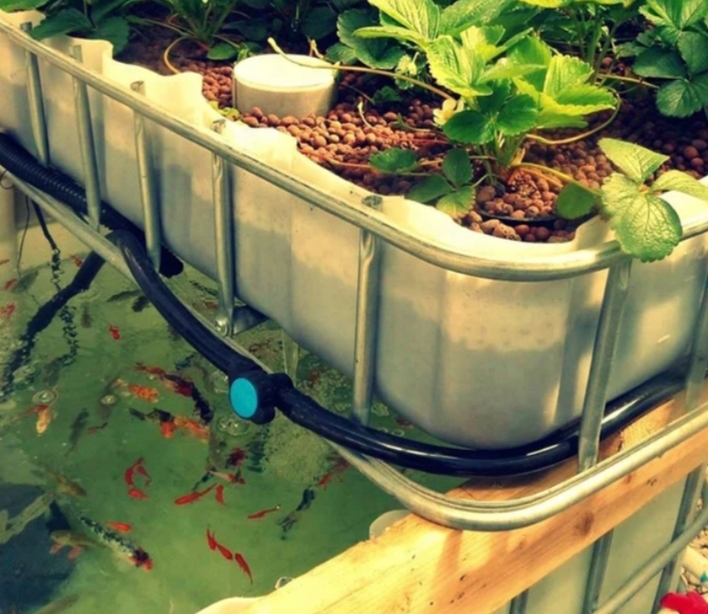
Aquaponics is a modern and sustainable farming technique that combines fish farming with soil-free plant cultivation. In this system, fish and plants support each other: fish produce waste that feeds the plants, while the plants help purify the water for the fish. This method uses less space and water, making it suitable for beginners and small-scale growers.
How Aquaponics Works
Fish are kept in a tank where they produce waste. Helpful bacteria convert this waste into nutrients that plants can absorb. The plants are grown in a separate bed and take up these nutrients, helping to clean the water. The filtered water is then returned to the fish tank, forming a continuous cycle.
Main Components of the System
A basic aquaponics setup consists of a fish tank, a plant grow bed, a water pump, and connecting pipes. The tank houses the fish, while the grow bed contains materials like gravel or clay pellets to support plant roots. Water is pumped from the tank to the grow bed, and after filtration, it flows back into the tank. Beneficial bacteria play a key role in converting fish waste into nutrients.
Steps for Setting Up
Begin by selecting a location with good sunlight and access to water and electricity. Install the fish tank and place the grow bed nearby or slightly above it. Set up the pump to circulate water between the two. Add a suitable growing medium and fill the system with clean water. Introduce fish gradually and allow time for bacteria to establish before planting crops such as leafy vegetables and herbs.
Selecting Fish and Plants
It is best for beginners to choose strong fish species that can adapt easily, such as tilapia, catfish, or goldfish. Plants like lettuce, spinach, basil, and mint are good choices because they grow quickly and require fewer nutrients.
Maintenance Practices
To keep the system running smoothly, regularly check water conditions such as pH, temperature, and ammonia levels. Feed fish in the right amounts to avoid excess waste. Ensure the pump is functioning properly and clean the system when necessary. Healthy fish and thriving plants indicate a balanced system.
Benefits of Aquaponics
This method conserves water, produces both fish and crops, and eliminates the need for chemical fertilizers. It is eco-friendly and can be practiced even in limited spaces.
Possible Challenges
Initial setup costs and the need for some technical understanding can be obstacles for beginners. Maintaining the right balance in the system and preventing fish diseases may also require attention. However, these issues can be managed with proper knowledge and care.
Conclusion
Aquaponics offers an efficient and sustainable way to produce food. With a clear understanding of how the system works and proper maintenance, beginners can successfully raise fish and grow fresh crops at the same time.