
Fall armyworm (Spodoptera frugiperda) is a highly destructive pest of maize, especially in Africa, where it has caused serious yield losses and threatens food security. Proper identification and effective management are essential to reduce its impact.
Identification of Fall Armyworm
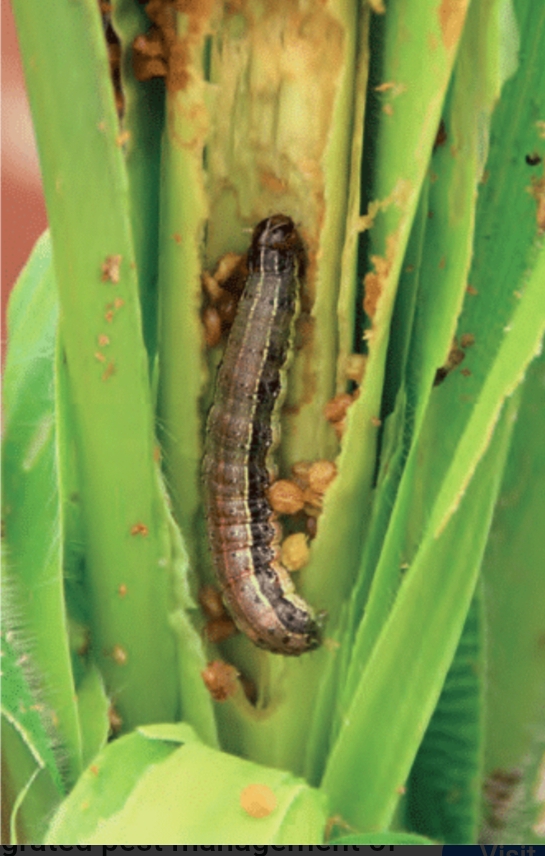
Eggs are laid in clusters of about 100–200 on the underside of leaves and are covered with a gray, fuzzy substance. The larval stage is the most damaging; the caterpillars vary in color from green to brown, have stripes along the body, and show a clear inverted “Y” mark on the head. They also have four black spots forming a square near the end of the body. Larvae feed on leaves, creating holes and ragged edges, and leave behind sawdust-like droppings in the maize whorl. Pupation occurs in the soil, where the insect turns reddish-brown. The adult is a nocturnal moth with gray-brown forewings and pale hind wings, capable of flying long distances.
Life Cycle and Behavior
The life cycle lasts about one month depending on temperature. A female can lay up to 1,000 eggs. The larvae are most active during cooler parts of the day and feed on maize as well as many other crops.
Economic Importance
Fall armyworm can cause severe damage, leading to yield losses of 20% to more than 50%, especially when infestation occurs early. In extreme cases, total crop failure may occur.
Control and Management
Effective control involves combining different methods. Cultural practices such as early planting, crop rotation, intercropping, and proper field sanitation help reduce infestation. Mechanical methods include hand-picking and destroying larvae or applying ash or sand into the plant whorl. Biological control involves the use of natural enemies like parasitoids and predators, as well as biopesticides such as Bacillus thuringiensis and neem products. Chemical control should only be used when necessary, with recommended insecticides applied early while larvae are still young, ensuring proper targeting and safe usage. Planting resistant maize varieties and regularly monitoring fields for early signs of infestation are also important steps.
Conclusion
Although fall armyworm is a serious pest, its damage can be minimized through early detection and a combination of management strategies. Farmers who adopt integrated control methods can better protect their maize crops and improve yields.