
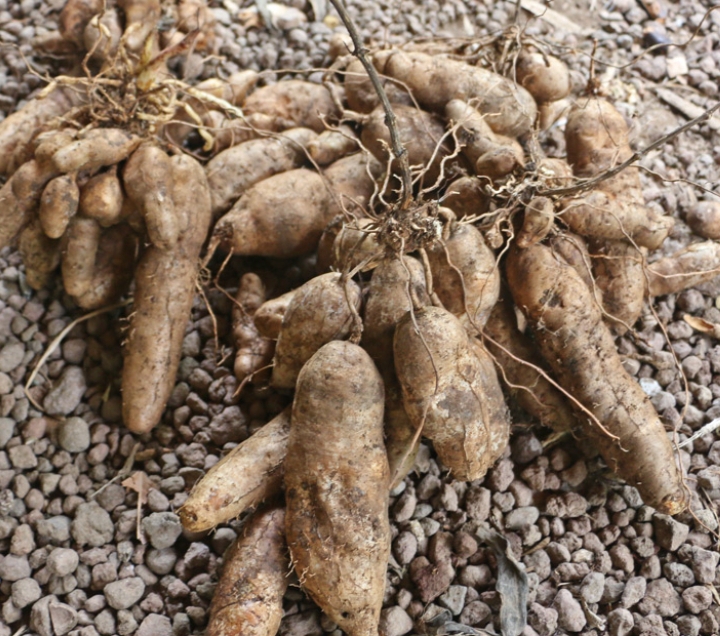
Yam is an essential food crop in many West African communities, both for consumption and income generation. A common challenge in yam farming is the limited availability of quality seed tubers, since farmers often have to set aside a large share of their harvest for planting. The yam minisett technique provides a practical and economical way to overcome this limitation by generating more planting materials from fewer tubers.
Understanding the Yam Minisett Technique
This method involves dividing a single yam tuber into several small portions known as “minisetts,” typically weighing between 25 and 50 grams each. These pieces are prepared and planted to grow into seed yams, which can later be used for larger-scale cultivation. Compared to traditional practices, this approach greatly increases the number of seeds produced from one tuber.
Procedure for the Minisett Technique
- Choosing Suitable Tubers
Select fully matured, healthy yams that are free from diseases, pests, or any form of damage, as these factors can affect sprouting. - Preparing the Minisetts
Cut the tubers into small, uniform pieces, ensuring each piece retains part of the outer skin, which is necessary for sprout development. - Treating the Pieces
To reduce the risk of decay and pest infestation, treat the cut sections with fungicides and insecticides or coat them with wood ash. Leave them to dry for one to two days to allow healing. - Planting
Place the treated minisetts in well-tilled, fertile soil at a depth of about 5–10 cm, maintaining appropriate spacing such as 25 cm by 25 cm. Good drainage is important for optimal growth. - Field Management
Cover the soil with mulch to retain moisture and maintain suitable temperature conditions. Regular weeding and pest control are necessary to support healthy development. - Harvesting
Within 3 to 4 months, the planted minisetts produce small tubers that serve as seed yams for subsequent planting seasons.
Benefits of the Technique
- Increased seed production: A single yam can yield many planting pieces.
- Reduced cost: Less reliance on whole tubers for planting allows more for sale or consumption.
- Better crop health: Treated minisetts help minimize disease spread.
- Adaptability: The method works well for both small-scale and commercial farmers.
Key Challenges
- Proper treatment is essential to avoid rot.
- Adequate moisture must be maintained, especially early on.
- Farmers need proper guidance to apply the technique effectively.
- Careful storage of harvested seed yams is required to prevent spoilage.
Summary
The yam minisett technique is a valuable innovation that helps solve the problem of limited planting materials in yam production. By enabling farmers to produce more seed yams from fewer resources, it supports higher productivity, improved income, and greater food security when properly implemented.