
Introduction
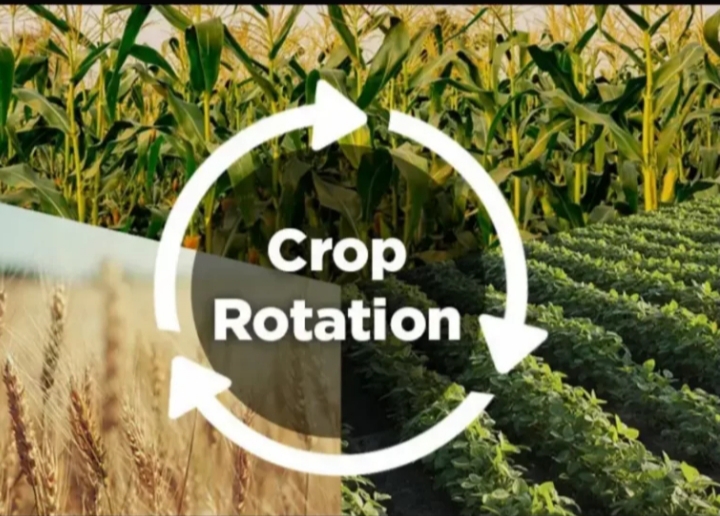
Crop rotation is a simple farming practice that can make a significant difference on small farms. It involves growing different crops on the same piece of land in a planned sequence rather than planting the same crop season after season.
When properly managed, crop rotation can help maintain soil fertility, reduce pest and disease problems, improve soil structure, control weeds and support more stable farm production. It can also help farmers produce a wider range of food and generate income from different crops.
For small-scale farmers, crop rotation does not need to be complicated. A basic two- or three-year rotation can be enough to provide useful benefits.
What Does Crop Rotation Mean?
Crop rotation is the planned practice of changing the crop grown on a particular field from one season or year to the next.
For instance, a farmer could grow maize in the first year, cowpea in the second year and cassava in the third year before returning to maize.
The main purpose is to avoid repeatedly exposing the soil to the same crop’s nutrient demands, pests, diseases and growing practices.
On a small farm, different sections can be assigned different crops so that the farmer continues producing several crops every year while each plot follows its own rotation cycle.
Why Small Farmers Should Practice Crop Rotation
Improving Soil Fertility
Crops remove nutrients from the soil in different amounts. Growing the same crop continuously can cause particular nutrients to become depleted.
Including legumes such as cowpea, groundnut, soybean and beans in the rotation can be beneficial because these crops work with soil microorganisms to fix atmospheric nitrogen. This can contribute to better nitrogen availability within the farming system.
Returning suitable crop residues to the soil can also add organic matter and improve soil condition.
Reducing Pest and Disease Pressure
Many insects, pathogens and other crop problems are closely associated with particular crops.
When the same crop is grown repeatedly, these organisms can multiply and become increasingly difficult to manage. Changing the crop can interrupt their life cycles and reduce their ability to survive and reproduce.
Managing Weeds
Different crops create different growing conditions and require different methods of field management. Rotating crops can therefore prevent a particular weed species from becoming dominant.
Some crops develop dense canopies that suppress weeds, while others allow farmers to weed between rows. Changing crops can make weed management more effective.
Maintaining Healthy Soil Structure
Different crops have different types of root systems. Deep-rooted crops can reach nutrients and moisture in lower soil layers, while crops with extensive root systems can contribute organic matter and improve soil aggregation.
A diverse rotation can therefore support better water infiltration, aeration and moisture retention.
Diversifying Food and Income
Growing several crops gives farmers more than one source of food and income.
If one crop performs poorly because of unfavorable weather, pests or market conditions, other crops in the rotation may still provide food or revenue.
Key Principles for Designing a Rotation
Farmers can create effective rotations by following a few basic guidelines.
Change Crop Families
Avoid repeatedly growing crops belonging to the same plant family on the same plot.
For example, maize and sorghum are both cereals. A rotation that alternates cereals with legumes or root crops may provide greater diversity.
Include Legumes
Cowpea, groundnut, soybean and beans can be valuable components of a rotation because of their contribution to nitrogen cycling.
Mix Different Root Systems
Alternating crops with shallow and deeper root systems can encourage more effective use of different layers of the soil.
Consider Pest and Disease History
If a field has experienced a serious pest or disease problem, avoid immediately planting another susceptible crop in that location.
Match the Rotation to the Market
Farmers should not select crops solely for their soil benefits. The crops should also have value as food, livestock feed or sources of income.
A Simple Two-Year Rotation
Farmers who are new to crop rotation can start with a straightforward two-year system.
Year One: Maize
Plant maize during the main production season and manage it appropriately.
Year Two: Cowpea or Groundnut
Replace the maize with a legume such as cowpea or groundnut.
The following season, maize can return to the field.
The basic sequence becomes:
Maize → Cowpea → Maize → Cowpea
This approach introduces a legume after a cereal and provides an opportunity to diversify both production and income.
A Three-Year Rotation
Farmers with sufficient land and planning flexibility can introduce a third crop.
A practical sequence could be:
Year 1: Maize
Year 2: Cowpea or soybean
Year 3: Cassava or another suitable root crop
The cycle can then return to maize.
This system combines cereal, legume and root crops, providing greater diversity than continuous cereal production.
A Four-Year Rotation
A longer rotation can provide additional opportunities for crop diversification.
For example:
Year 1: Maize
Year 2: Cowpea or groundnut
Year 3: Cassava
Year 4: Soybean or another suitable legume
Year 5: Maize
This sequence gives the field two periods involving legumes while separating periods of cereal cultivation.
The rotation can be adjusted according to rainfall, soil characteristics, labor requirements and local market conditions.
Rotation for Vegetable Farms
Vegetable producers can also benefit from rotating crops.
Planting the same vegetable continuously on the same beds can encourage certain pests and diseases to accumulate. Changing crops helps reduce this risk.
For example, a farmer might use a sequence such as:
Season 1: Tomato or pepper
Season 2: Beans or cowpea
Season 3: Cabbage or another leafy vegetable
Season 4: A suitable root crop
Where possible, crops from different botanical families should be rotated rather than simply changing between closely related vegetables.
Crop Rotation in West African Smallholder Systems
Farmers in West Africa can develop rotations around crops that are well adapted to their particular environments.
For example:
Year 1: Maize
Year 2: Cowpea
Year 3: Groundnut
Year 4: Sorghum
Year 5: Maize
Another possible system is:
Year 1: Maize and cowpea intercrop
Year 2: Cassava
Year 3: Groundnut
Year 4: Maize
Year 5: Cowpea
These are examples rather than universal recommendations. Farmers should modify the sequence according to their local climate, soil, market and production objectives.
Combining Rotation With Intercropping
Crop rotation can work alongside intercropping.
For example, maize and cowpea can be cultivated together during one season, followed by cassava or groundnut on the same plot in a subsequent season.
Intercropping allows farmers to produce multiple crops at the same time, while rotation changes the crops grown on the field over successive seasons.
However, farmers should select compatible crops and planting arrangements to reduce competition for water, sunlight and nutrients.
How to Create a Crop Rotation Plan
Creating a rotation plan can be done in a few simple steps.
1. Divide the Farm Into Plots
Separate the farm into manageable sections. The number of plots can depend on the size of the farm and the length of the desired rotation.
2. Identify the Crops You Need
List crops required for household consumption, livestock feed and income.
3. Classify the Crops
Group them into categories such as cereals, legumes, root crops and vegetables.
4. Identify Major Farm Problems
Consider the major weeds, pests, diseases and soil fertility problems affecting each field.
5. Arrange the Crops in Sequence
Avoid growing the same crop repeatedly. Where possible, alternate different crop families.
6. Add Legumes
Include crops such as cowpea, groundnut, soybean or beans where they are suitable.
7. Check the Practicality of the Plan
Make sure the rotation fits available labor, rainfall, seed, fertilizer, equipment and market opportunities.
Common Mistakes to Avoid
Continuous Monocropping
Growing the same crop repeatedly can increase nutrient depletion and encourage crop-specific pests and diseases.
Rotating Only Similar Crops
Simply changing from maize to sorghum may not provide as much benefit as introducing a legume or another unrelated crop.
Removing All Crop Residues
Where appropriate and safe, some healthy crop residues can be retained or returned to the soil to support organic matter levels.
Ignoring Water Requirements
The crops included in a rotation should be appropriate for the farm’s water supply. Farmers in drought-prone areas should be cautious about including crops that require substantial moisture.
Forgetting Profitability
Crop rotation should improve the farm’s sustainability without sacrificing economic viability. Farmers need crops that can be consumed, stored or sold profitably.
Advantages of a Well-Planned Rotation
A properly designed rotation can help farmers achieve:
- Improved soil fertility
- Better nutrient cycling
- Reduced pest buildup
- Lower disease pressure
- Improved weed management
- Better soil structure
- Greater crop diversity
- More reliable food supplies
- Multiple sources of farm income
- Improved resilience to weather-related risks
- More sustainable use of farmland
Conclusion
Crop rotation is an affordable and practical strategy for improving the productivity and sustainability of small farms. It allows farmers to break the cycle of continuous monocropping while making better use of soil nutrients and reducing the buildup of crop-specific pests and diseases.
A simple system such as maize → cowpea → maize can be a useful starting point. Farmers with more land and resources can develop longer rotations involving maize, legumes, cassava, groundnut, sorghum and other locally suitable crops.
There is no single rotation that works for every farm. The most effective plan is one that reflects the farmer’s soil type, climate, rainfall pattern, available labor, food requirements, pest and disease challenges and market opportunities.
By combining crop rotation with practices such as good soil management, appropriate fertilizer use, timely planting and responsible residue management, small-scale farmers can maintain healthier soils and build more productive and resilient farming systems over the long term.