
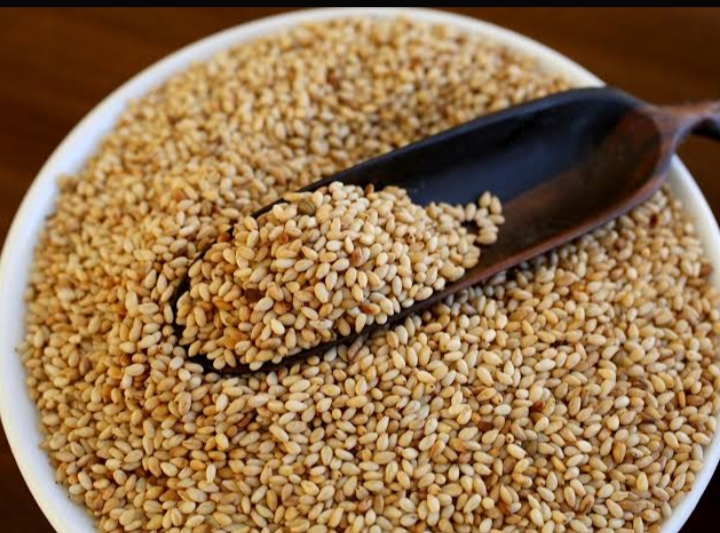
Sesame farming offers promising opportunities for farmers and agribusinesses because sesame seeds are used in food production, oil processing and international trade. In Nigeria, sesame is commonly traded as white sesame and brown or mixed-colour sesame. While both varieties have commercial value, they often serve different markets and may attract different prices.
Knowing these market differences can help farmers select suitable varieties, plan production and negotiate better prices with buyers.
White Sesame and Its Market
White sesame is widely associated with the food and premium export market. Its attractive appearance and lighter colour make it desirable for bakeries, confectionery producers, restaurants, tahini manufacturers and other food businesses.
Nigeria has an established export market for sesame, with countries such as China, Japan and Turkey representing important destinations.
Because food and export buyers often demand clean, bright and uniform seeds, white sesame can attract a price premium. However, producing a white-seeded variety does not automatically guarantee a high price. The seeds must also be properly harvested, dried, cleaned, sorted and stored.
Brown Sesame and Its Market
Brown sesame is commonly associated with oil production and processing markets. In this segment, buyers are often more concerned with oil content, seed quality and processing performance than with the colour and appearance of the seed.
Brown sesame therefore has an important commercial market, particularly among oil processors and other industrial users. In some locations, it may also have strong demand from local traders and processors.
The distinction between white and brown sesame is not absolute, however. Some buyers may accept different sesame colours depending on their processing requirements and the quality specifications of their customers.
Why White Sesame May Command a Higher Price
The difference in price between white and brown sesame is mainly influenced by market demand and quality requirements.
White sesame is often used in higher-value food markets where buyers place a strong emphasis on appearance, cleanliness and uniformity. Brown sesame, on the other hand, is frequently sold to processors interested in extracting oil.
Previous studies of Nigeria’s sesame value chain have reported higher international prices for white sesame compared with brown sesame. However, the actual price difference changes according to supply, demand, seed quality and prevailing market conditions.
Therefore, farmers should not assume that colour alone determines profitability. A clean, well-graded brown sesame crop may be more attractive to an oil processor than poorly handled white sesame.
Quality Is More Than Seed Colour
Colour is only one aspect of sesame quality. Buyers commonly consider several other characteristics when determining the value of a consignment.
These include:
- Purity: how much of the consignment is actually sesame seed.
- Moisture content: high moisture can encourage mould and spoilage.
- Foreign materials: stones, soil, stalks and other contaminants can reduce value.
- Seed size: some buyers prefer larger and more uniform seeds.
- Oil content: especially important for crushing and processing.
- Colour uniformity: particularly relevant to food-grade buyers.
- General cleanliness: important for both domestic and export markets.
Export-oriented markets can have strict requirements for purity, moisture, foreign matter and oil content.
Consequently, post-harvest handling is an important part of sesame farming. Good harvesting, drying, cleaning and storage practices can significantly influence the final selling price.
Which Sesame Should Farmers Grow?
There is no single answer for every farmer. The better option depends on the market available in the farmer’s location.
White sesame may be more suitable where farmers have access to exporters, food manufacturers, bakeries and other premium buyers.
Brown sesame may be a practical choice in areas with strong demand from oil processors and other industrial buyers.
Rather than asking only, “Which sesame sells for more?”, farmers should ask:
“Which type can I sell reliably at a profitable price in my target market?”
A variety with a theoretically higher market price may not be the best choice if buyers are scarce or the farmer cannot meet their quality specifications.
Choosing the Right Seed
Before planting a commercial sesame farm, farmers should obtain quality planting seed from dependable suppliers and understand the characteristics of the variety.
Important considerations include:
- Yield potential.
- Maturity period.
- Suitability to local soil and climate.
- Resistance or tolerance to major production challenges.
- Seed colour preferred by the target market.
- Oil content where the crop is intended for oil processing.
- Availability of reliable buyers.
Sesame is also attractive because of its relatively short production cycle. In Nigeria, it can typically mature within about 90–110 days, depending on the variety and growing conditions.
Comparing the Two Markets
| Factor | White Sesame | Brown/Mixed Sesame |
|---|---|---|
| Main market | Food, premium and export markets | Oil and industrial markets |
| Importance of appearance | Very high | Relatively lower |
| Common buyers | Exporters and food processors | Oil processors and commodity traders |
| Price potential | Generally higher | Generally lower |
| Cleaning requirements | Very high | High |
| Importance of oil content | Important | Very important |
| Marketing approach | Target premium buyers | Target processors and volume buyers |
Marketing Should Start Before Planting
Successful sesame farming requires farmers to consider the market before establishing their fields.
Before deciding which variety to plant, farmers should find out:
- Which buyers operate in their area?
- Do they prefer white or brown sesame?
- What quality standards do they require?
- Is there a price premium for cleaner or larger seeds?
- What moisture level will they accept?
- Are they buying for export, food production or oil extraction?
- What quantity can they purchase?
Having this information in advance can reduce the risk of producing a crop that is difficult to sell at the expected price.
Conclusion
White and brown sesame offer different commercial opportunities. White sesame generally has stronger potential in food-grade and premium export markets, where appearance, cleanliness and uniformity are important. Brown sesame is particularly valuable to oil processors and industrial buyers, who may place greater emphasis on oil content and processing characteristics.
For farmers, the best approach is to select a variety based on the target market, buyer requirements, production conditions and expected returns. Good post-harvest handling is equally important because quality can determine whether sesame earns a premium or is sold at a discount.
In the end, profitable sesame farming is not simply about producing more seed. It is about producing the right variety, meeting the required quality standard and connecting that product with the right market.