
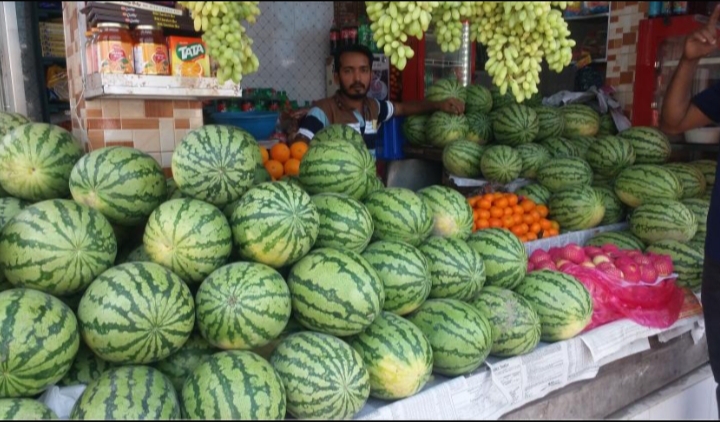
Watermelon farming can generate good returns within a relatively short production period, but achieving a good harvest does not automatically guarantee good profit. One of the most important decisions a farmer can make is when to take the crop to market.
Because watermelon prices change according to supply and demand, farmers who plan their planting and harvesting dates carefully can improve their chances of selling when prices are favourable.
Timing Can Determine Profitability
Watermelon prices fluctuate throughout the year. When large quantities of fruit arrive in the market at the same time, traders have more bargaining power and farmers may be forced to accept lower prices.
However, when production is lower and consumer demand remains strong, prices can rise.
This creates a simple marketing principle:
Aim to harvest when market supply is relatively low and demand is strong.
Seasonal demand varies from one location to another. For example, research in Anambra State found periods of stronger watermelon demand between October and January, while June to August was identified as a weaker-demand period. Such patterns should be treated as local market indicators rather than fixed rules for every part of Nigeria.
Plan Backwards From Your Target Market
Instead of choosing a planting date simply because it is the traditional season, farmers should first determine when they want to sell.
If a particular watermelon variety takes around 75–90 days to mature, the farmer can count backwards from the desired marketing period to determine when planting should begin.
For example:
Target selling period → expected harvest date → crop duration → planting date
This method allows production decisions to be guided by market opportunities.
Off-Season Production Can Create Opportunities
Farmers who have access to reliable irrigation may be able to produce watermelon outside the main rain-fed production period.
In Nigeria, irrigation allows farmers in suitable areas to cultivate watermelon during dry periods, although the best production window depends on location, climate, water availability and the chosen variety.
Producing when fewer farmers are harvesting can potentially give growers access to stronger prices. Nevertheless, off-season production often comes with additional expenses, particularly for irrigation, fuel, labour and crop management.
The important question is therefore not simply whether prices are high, but whether the price premium is large enough to cover the additional production costs.
Calculate Profit, Not Just Selling Price
A high watermelon price can be attractive, but farmers should calculate their actual production costs before committing to a production cycle.
Expenses may include:
- Irrigation
- Fuel or electricity
- Seeds
- Fertiliser
- Crop protection
- Labour
- Harvesting
- Transportation
- Packaging
- Market charges
The real measure of success is:
Net profit = Total revenue − Total production and marketing expenses.
A crop sold at a high price may still produce a poor return if production and transportation costs are excessive.
Study the Market Before Planting
Market research should begin before seeds go into the soil.
Farmers should investigate:
- Which markets have strong demand for watermelon?
- When does supply normally become tight?
- What sizes do buyers prefer?
- Which varieties are popular?
- What prices are traders offering?
- How much will transportation cost?
- Are there direct buyers such as hotels, restaurants or supermarkets?
Watermelon prices can differ considerably between locations, so farmers should avoid relying solely on general price information. Local traders and buyers can provide more useful information about the actual market available to a particular farmer.
Quality Still Matters
Good timing cannot compensate for poor-quality fruit.
Buyers generally prefer watermelons that are mature, sweet, firm, attractive and free from serious damage. Uniform fruit size can also make a consignment easier to market.
Harvesting too early can produce fruit with poor eating quality, while leaving mature fruit in the field for too long can increase the risk of cracking, disease and other losses.
Farmers should therefore combine market timing with proper maturity assessment.
Consider Staggered Planting
Instead of planting an entire farm on a single date, commercial farmers can divide their fields into several planting batches.
For example:
- First section — early planting
- Second section — later planting
- Third section — final planting
This can spread the harvest over different periods and reduce the risk of having the entire crop enter the market during a price slump.
The interval between planting dates should be determined by the variety, weather, irrigation system and the expected market window.
Monitor Prices as Harvest Approaches
Market monitoring should become more frequent as the crop gets closer to maturity.
If supply appears to be falling and prices are improving, farmers can prepare to sell promptly once the fruit reaches marketable maturity.
If prices are declining because large volumes are arriving, farmers can compare several markets and buyers rather than immediately accepting the first offer.
However, watermelon is perishable. Farmers cannot normally store mature fruit for long periods while waiting indefinitely for a higher price.
For this reason, it is wise to establish relationships with buyers before harvesting begins.
Explore Different Buyers
Farmers who sell only to farm-gate traders may have limited negotiating power.
Depending on location and scale, potential buyers can include:
- Wholesale traders
- Major urban markets
- Supermarkets
- Hotels
- Restaurants
- Juice processors
- Fruit retailers
- Direct consumers
Selling directly to end users can sometimes increase revenue, but it may also bring additional transportation, labour and marketing costs.
The best market is therefore the one that provides the farmer with the strongest net return, rather than simply the highest quoted price.
Don’t Wait for the Perfect Price
Trying to sell at the absolute highest price is risky because agricultural markets are difficult to predict.
Prices can suddenly change when new supplies arrive, weather conditions alter production, transportation costs increase or consumer demand weakens.
Rather than waiting for a perfect price peak, farmers should aim for a profitable market window.
Selling at a strong price when the fruit is ready may be wiser than delaying sales and risking spoilage in the hope that prices will rise further.
Conclusion
Successful watermelon farming involves more than producing large fruits. Knowing when and where to sell can be just as important as achieving a high yield.
Farmers who study market patterns, identify periods of stronger demand, plan planting dates around their target harvest window and establish buyers before harvest can improve their chances of earning better returns.
The objective should not simply be to produce watermelon. It should be to produce the right quantity, at the right time, for the right market.
In commercial watermelon farming, timing is not an afterthought it is part of the production strategy.