
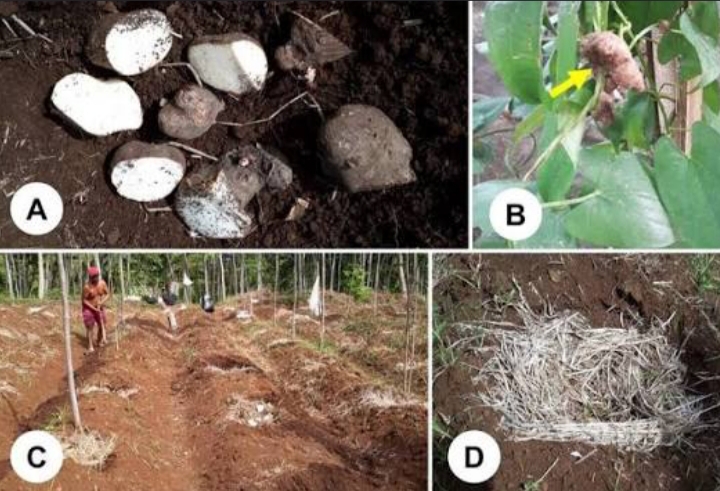
The yam minisett technique is a propagation method used to multiply planting materials of Yam quickly and efficiently. It helps farmers overcome the challenge of limited seed yams by turning one tuber into many viable planting pieces.
Overview of the method
Instead of planting a whole yam tuber, it is sliced into small sections known as minisetts. Each piece is carefully prepared so it can grow into a new plant. When managed well, this approach allows a farmer to greatly increase the number of seed yams available for future planting seasons.
Steps involved
A healthy, disease-free yam tuber is first selected to ensure strong and successful sprouting.
The tuber is then cut into small setts, usually around 25–50 grams each, making sure every piece contains at least one growth bud.
After cutting, the setts are treated using ash or recommended chemical solutions to protect them from rot, pests, and fungal infections.
Next, the treated pieces are placed in a nursery environment with moist soil or sawdust to encourage sprouting before field planting. Only those that sprout well are later moved to the main farm.
Finally, the sprouted setts are transplanted into the field and managed with proper spacing, weeding, and soil care to support healthy growth.
Why it boosts production significantly
Because one tuber is divided into many small planting units, a single yam can produce multiple new seed yams. Over time, this multiplication effect can greatly expand farm output and reduce dependence on expensive seed tubers.
Advantages of the minisett system
- Produces many planting materials from one tuber
- Reduces the cost of seed yams
- Supports faster farm expansion
- Helps control disease through careful selection
- Encourages commercial-scale yam farming
Key success practices
Farmers should always use clean planting materials, avoid overly small cut pieces, ensure proper treatment after cutting, and maintain good moisture levels during early growth.
In summary, the yam minisett technique is an effective way of multiplying Yam production, enabling farmers to transform a single tuber into many plants and rapidly expand their farms.