
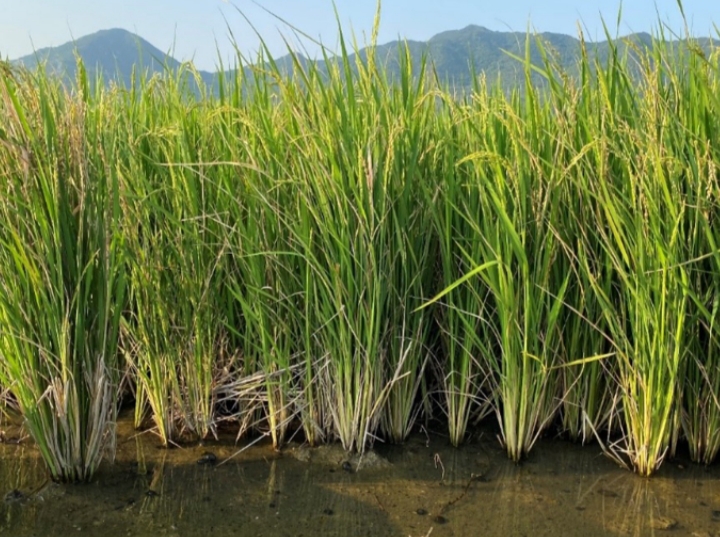
Flood-resistant rice varieties are specially developed to withstand flooding conditions commonly experienced in riverine and lowland farming areas. These varieties are generally classified into two groups: those that can survive temporary complete submergence caused by flash floods and those adapted to deepwater conditions where water levels rise gradually over an extended period.
For areas prone to flash flooding, varieties carrying the Sub1 flood-tolerance trait are highly recommended. Examples include Swarna-Sub1, IR64-Sub1, Samba Mahsuri-Sub1, and BR11-Sub1. These varieties can endure complete submergence for up to two weeks and recover effectively once floodwaters recede.
In locations where flooding is deeper and lasts longer, deepwater rice varieties are more suitable. Varieties such as Jalmagna and Madhukar possess the ability to elongate their stems as water levels increase, enabling them to remain above the water surface and continue growing.
For riverine regions in Nigeria and other parts of West Africa, farmers are encouraged to adopt flood-tolerant varieties developed through research programs led by the Africa Rice Center and the International Rice Research Institute. These improved varieties contribute to stable yields, reduced crop losses, and enhanced food security in flood-prone environments. The choice of variety should be guided by local flooding patterns, water depth, soil conditions, and the duration of inundation.