Goat production is a major part of livestock farming in Nigeria, contributing to meat supply, income generation, and rural livelihoods. Goats are widely preferred because they are tough animals that can survive in different environments with relatively low management costs. However, some breeds perform better than others depending on climate, feeding conditions, and farming systems.
Knowing the most suitable breeds helps farmers achieve better growth, survival rates, and overall productivity.
1. West African Dwarf Goat
The West African Dwarf (WAD) goat is the dominant native breed in southern Nigeria. It is well known for its ability to withstand harsh tropical conditions.
Main features:
- Small in size but very resilient
- Strong resistance to common tropical diseases
- High reproductive performance
- Can thrive on simple grazing and low-quality feed
Even though it produces less meat per animal, its adaptability and survival rate make it highly valuable for small-scale farmers.
2. Sahel Goat
The Sahel goat is commonly raised in northern Nigeria, particularly in dry and semi-arid zones. It is a larger breed mainly used for meat production.
Main features:
- Tall and lean body structure
- Excellent tolerance to heat and drought
- Faster weight gain compared to many local breeds
- Best suited for open grazing systems
It performs well in environments where vegetation is sparse but wide grazing areas are available.
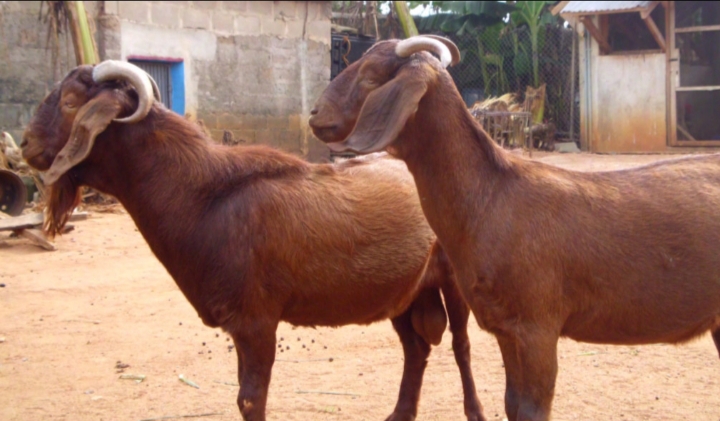
3. Red Sokoto Goat (Maradi Goat)
The Red Sokoto goat, also called the Maradi goat, is highly regarded in Nigeria for both meat and its valuable skin.
Main features:
- Distinct reddish-brown coat
- Medium-sized body with good meat quality
- Produces high-quality leather skin
- Well adapted to northern climates
It is economically important, especially in leather production markets.
4. Boer Goat
The Boer goat is an improved exotic breed from South Africa, introduced to increase meat production in Nigeria.
Main features:
- Very fast growth rate
- Heavy, muscular body build
- High meat yield potential
- Needs better feeding and management than local breeds
It is often used in crossbreeding programs to boost the performance of indigenous goats.
5. Anglo-Nubian Goat
The Anglo-Nubian is a dual-purpose breed used for both milk and meat production.
Main features:
- Good milk production compared to most local breeds
- Large body size
- Adapts well to warm climates when properly managed
- Requires quality feed and better housing conditions
It is commonly found in more intensive or semi-intensive farming systems.
How to Select the Right Breed
The best goat breed depends on the farmer’s environment and goals:
- Climate: WAD goats suit humid southern areas, while Sahel and Red Sokoto goats perform better in dry northern regions.
- Production goal: Boer goats are ideal for meat, Anglo-Nubians for milk, and local breeds for hardiness and low-cost farming.
- Farming system: Extensive grazing favors hardy local breeds, while intensive systems support improved exotic breeds.
Conclusion
Nigeria has a variety of goat breeds that thrive under different environmental conditions. Indigenous breeds such as the West African Dwarf, Sahel, and Red Sokoto goats remain essential due to their resilience and adaptability. At the same time, exotic breeds like Boer and Anglo-Nubian goats provide opportunities for higher productivity when properly managed.
Farmers can improve results by choosing breeds that match their environment or by using crossbreeding to combine desirable traits.