
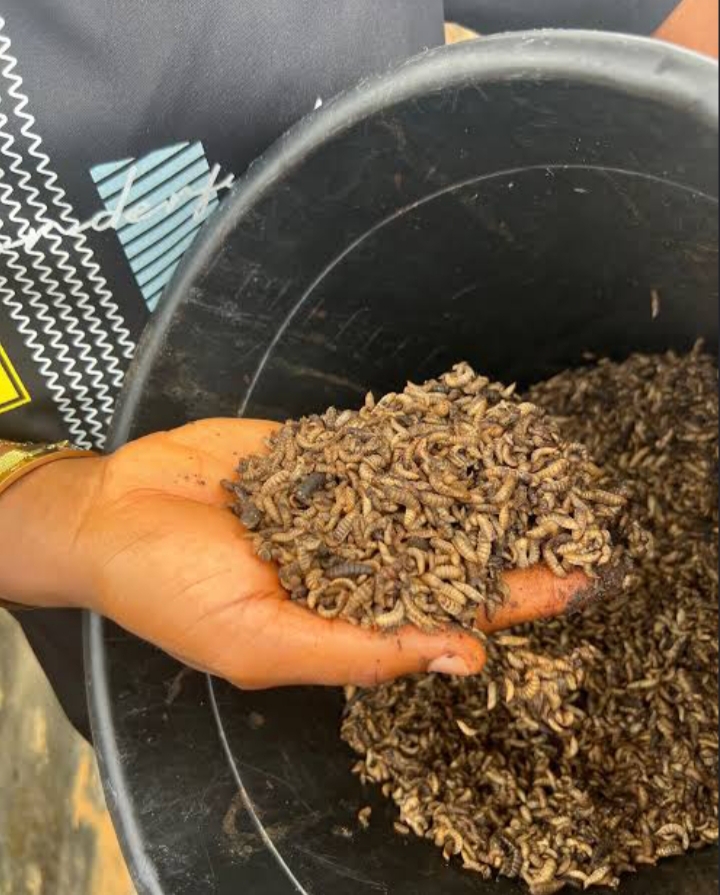
Maggot production is an affordable and environmentally friendly way to generate high-protein feed for fish. By converting organic waste into a valuable feed resource, farmers can significantly reduce feeding costs while promoting sustainable aquaculture practices.
Step 1: Choose an Appropriate Site
Select a shaded, well-aerated location that is protected from excessive rainfall and flooding. The area should be accessible to flies, which are essential for the production process.
Step 2: Set Up Rearing Containers
Prepare containers such as plastic bins, drums, wooden boxes, or concrete troughs. Ensure they have drainage holes to prevent water accumulation and maintain suitable moisture levels.
Step 3: Collect Organic Materials
Gather biodegradable waste materials that can support maggot growth, including:
- Poultry droppings
- Livestock manure
- Fish remains
- Fruit and vegetable waste
- Household food scraps
Avoid using waste contaminated with harmful chemicals.
Step 4: Load the Substrate
Place the organic materials into the containers and maintain moderate moisture. The substrate should be damp enough to encourage decomposition without becoming waterlogged.
Step 5: Encourage Fly Activity
Leave the containers partially exposed or cover them with mesh that allows flies to access the waste. Flies will naturally lay eggs on the decomposing material.
Step 6: Monitor Larval Development
Within a few days, the eggs hatch into larvae. The maggots feed on the organic matter and grow quickly, usually reaching harvest size within one week.
Step 7: Harvest the Maggots
Collect the mature larvae by sieving the substrate or using collection systems that allow the maggots to move into harvesting trays.
Step 8: Wash the Harvest
Rinse the harvested maggots with clean water to remove any remaining waste and impurities.
Step 9: Prepare for Feeding
The harvested maggots can be used in different forms:
- Fresh for immediate feeding
- Sun-dried for short-term storage
- Processed into maggot meal for inclusion in formulated fish feeds
Step 10: Store Correctly
Dry maggots or maggot meal should be kept in sealed containers and stored in a cool, dry environment to preserve quality and prevent spoilage.
Advantages of Maggot Production
- Provides a low-cost source of protein for fish.
- Reduces dependence on expensive commercial feeds.
- Recycles organic waste efficiently.
- Requires little capital and space.
- Promotes sustainable and eco-friendly fish farming.
With proper management, maggot production can become a reliable and profitable method of supplying nutritious feed for aquaculture operations.