
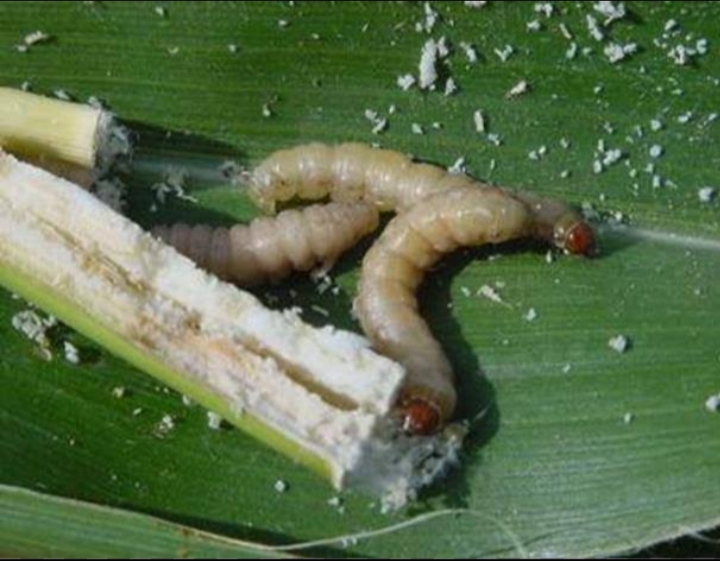
Stem borers are major insect pests that commonly affect sorghum and millet, particularly in tropical and semi-arid farming regions. They can cause serious yield losses if not properly managed, making them a key concern for farmers in places like Nigeria and across Africa.
What Stem Borers Are
Stem borers are the immature (larval) stage of certain moth species. Adult moths lay eggs on young cereal crops, and when the larvae hatch, they tunnel into the stems where they feed and grow. This internal feeding makes the damage difficult to notice until it becomes severe.
Some of the main species involved include:
- Busseola fusca
- Chilo partellus
- Sesamia calamistis
While often linked with maize, these insects also attack sorghum and millet, especially where different cereals are grown together.
Signs of Infestation
Infested crops show several warning symptoms:
- Dead heart formation: The central shoot dries up and dies in young plants
- Stem damage: Tunnels inside stems weaken plant strength
- Reduced grain yield: Damage during flowering leads to poor seed formation
- Plant lodging: Weakened stems cause plants to fall over
Since the larvae live inside the plant, infestations are often discovered late.
Life Cycle Overview
Stem borers develop through four main stages:
- Eggs laid on leaves or stems
- Larvae that feed inside the plant (most destructive stage)
- Pupae formed within stems or plant debris
- Adult moths that emerge to reproduce
Warm climates allow them to reproduce multiple times in a season, increasing pressure on crops.
Conditions That Encourage Outbreaks
Certain farming conditions make infestations more likely:
- Delayed planting
- Continuous growing of cereals without rotation
- Leaving crop residues in the field
- Poor field hygiene
- Drought stress, which weakens plants
How to Manage Stem Borers
A combination of methods works best for control:
Cultural Methods
- Plant early to avoid peak pest periods
- Rotate crops to disrupt pest cycles
- Remove and destroy leftover crop residues
- Use intercropping systems where possible
Resistant Varieties
Some sorghum and millet varieties have natural resistance and suffer less damage.
Biological Control
Natural predators and parasitic insects help reduce stem borer populations. Supporting biodiversity can strengthen this natural control.
Chemical Control
Insecticides may be used during early stages of infestation, before larvae enter the stems. Once inside, chemical control becomes less effective.
Manual Control
In small-scale farms, affected plants showing early symptoms can be removed and destroyed.
Impact on Farming
If not controlled, stem borers can reduce harvests by 20% to over 50%, depending on severity and environmental conditions. This makes them a serious threat to food production and farmer income.
Conclusion
Stem borers are persistent pests in sorghum and millet farming, but their impact can be reduced through early action and integrated pest management. Combining good farming practices with timely interventions helps protect crops and improve yields.