
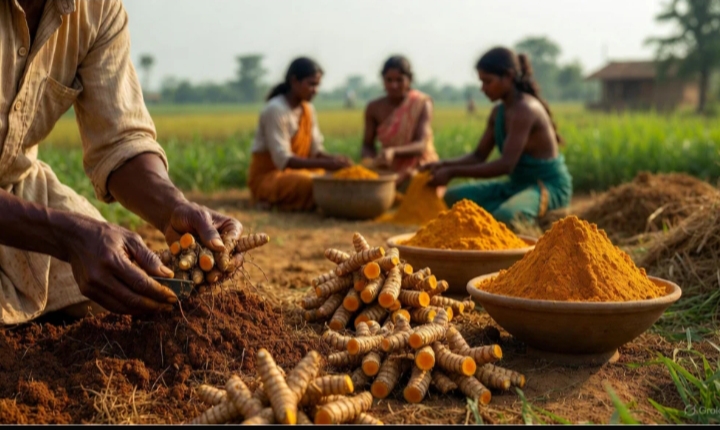
Turmeric farming is a profitable agricultural venture because demand is increasing globally in the wellness and natural health industry. It is widely used in supplements, herbal remedies, teas, skincare products, and food seasoning.
Turmeric is cultivated mainly for its underground stems (rhizomes), which are later processed into powder, extracts, or dried slices for various uses.
1. Why turmeric is in demand in health markets
Turmeric is popular in the health industry due to its active compound, curcumin, which is associated with:
- Anti-inflammatory effects
- Antioxidant support
- Immune system benefits
- Use in natural cosmetics and herbal products
Because of these benefits, it is widely used by:
- Supplement manufacturers
- Herbal medicine producers
- Skincare and wellness brands
- Health-conscious consumers
2. Ideal growing conditions
Turmeric thrives best in tropical environments with:
- Warm and humid weather conditions
- Temperatures between 20°C and 35°C
- Well-drained, fertile loamy soil
- Partial shade or filtered sunlight
- Soil pH ranging from 5.5 to 7.5
It should not be grown in waterlogged areas as this can damage the rhizomes.
3. Preparing the farmland
- Clear vegetation and remove all weeds
- Loosen the soil through tilling or digging
- Create ridges or raised beds for proper drainage
- Add compost or organic manure before planting
Good soil preparation improves plant growth and yield quality.
4. Planting process
- Use healthy rhizome pieces with visible buds
- Plant at a depth of about 5–7 cm
- Maintain spacing of roughly 30 cm by 25 cm
- Plant at the beginning of the rainy season for best results
Mulching helps conserve moisture and reduce weed growth.
5. Crop management
- Regular weeding during early growth stages
- Watering during dry periods when necessary
- Applying organic fertilizer or compost periodically
- Watching out for pests such as rhizome borers and leaf diseases
Organic care methods are preferred for health-focused markets.
6. Harvesting stage
- Harvest after about 7 to 10 months
- Plants are ready when leaves turn yellow and dry
- Carefully dig out rhizomes to avoid injury
Proper handling during harvest improves market value.
7. Processing for higher value markets
To access health and export markets, proper processing is important:
- Clean harvested rhizomes thoroughly
- Boil or cure them if required
- Dry completely under sunlight or dryers
- Grind into powder or process into extracts
Better processing leads to higher-quality products and better prices.
8. Selling opportunities
Turmeric can be sold in several markets:
- Local fresh produce markets
- Herbal and natural product stores
- Online wellness and health platforms
- Food supplement companies
- Export buyers for processed turmeric
Branding and packaging significantly increase profitability.
9. Profit overview
Returns depend on the level of processing:
- Fresh turmeric: lower profit but easier to start
- Dried powder: higher value and better demand
- Extracts: highest profit but requires more investment and expertise
Processing adds major value compared to raw sales.
10. Key recommendations
- Use high-quality, disease-free planting materials
- Maintain fertile and well-drained soil
- Ensure proper drying to avoid spoilage
- Focus on processing and branding for better income