
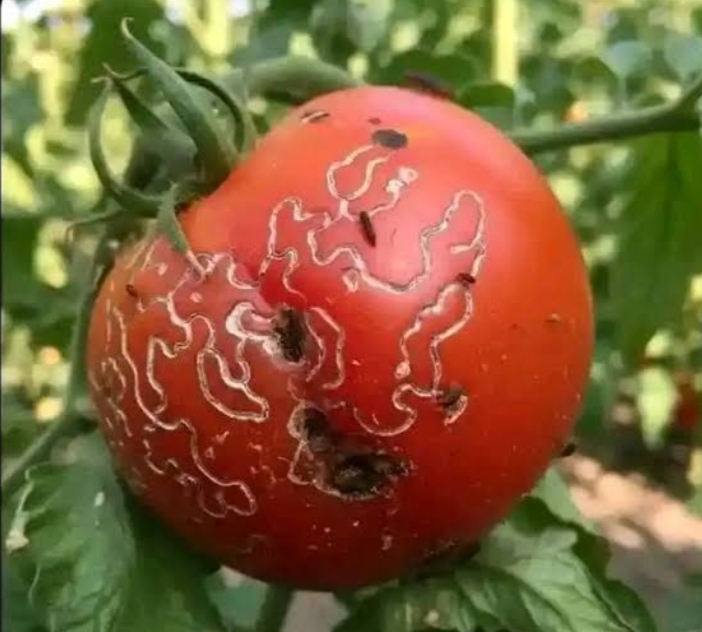
Tomatoes are among the most important crops worldwide, valued for both their nutritional benefits and economic significance. However, their production is under serious threat from a destructive pest known as Tuta absoluta, often called the tomato leaf miner. Despite its small size, this insect can cause massive damage, making it one of the most feared enemies of tomato farmers.
What is Tuta absoluta?
Tuta absoluta is a moth originally from South America that has spread rapidly across many parts of the world, including Africa, Europe, and Asia. While the adult moth does little harm, its larvae are extremely destructive. Once they hatch, the caterpillars burrow into different parts of the tomato plant, feeding from the inside and making control difficult.
Why It Is So Harmful
The larvae attack several parts of the tomato plant:
- Leaves, leaving behind pale, winding trails
- Stems, which weakens the plant
- Fruits, causing holes and making them unsuitable for sale
Because the larvae remain hidden inside plant tissues, they are protected from many pesticides. This allows infestations to grow quickly and often go unnoticed until significant damage has already occurred. In extreme situations, entire harvests can be lost.
Fast Reproduction and Spread
One of the reasons Tuta absoluta is so dangerous is its rapid reproduction. A single female can lay hundreds of eggs, and the pest completes its life cycle in just a few weeks. This leads to multiple generations within a single season, causing populations to increase very quickly.
Signs to Watch For
Detecting the pest early is essential. Common signs include:
- Light-colored, irregular patterns on leaves
- Tiny holes in tomatoes
- Small caterpillars inside plant parts
- Fruits that rot or fall off prematurely
Early identification can help reduce damage and prevent widespread infestation.
Methods of Control
Managing Tuta absoluta effectively requires a combination of approaches:
Cultural Methods
- Remove and destroy affected plants
- Rotate crops regularly
- Keep farms clean to limit breeding areas
Biological Methods
- Use natural predators and beneficial insects
- Support ecosystems that encourage these organisms
Monitoring Tools
- Set up pheromone traps to track and reduce moth numbers
- Inspect crops regularly
Chemical Methods
- Use pesticides carefully and only when necessary
- Rotate chemicals to avoid resistance
Wider Impact
The spread of Tuta absoluta reflects the challenges faced in modern agriculture. Once limited to one region, it has now spread globally through trade and movement. Its ability to survive in different environments and resist many treatments makes it a persistent problem.
In many developing regions, especially in Africa, the effects go beyond farming. Reduced tomato production can lead to higher prices, lower farmer incomes, and reduced access to food for consumers.
Sustainable Solutions
To tackle this pest effectively, farmers are encouraged to adopt integrated pest management (IPM). This approach combines different strategies to control pests in a more sustainable way. It focuses on prevention, early detection, biological control, and limited use of chemicals.
Providing farmers with proper training, information, and resources is also essential. Governments and agricultural organizations have an important role in supporting these efforts.
Conclusion
Tuta absoluta remains a serious threat to tomato production worldwide. Its rapid spread, hidden feeding habits, and resistance to control measures make it especially challenging. However, through awareness, early action, and the use of sustainable farming practices, its impact can be reduced.
Protecting tomato crops is not only about preserving yields but also about ensuring food security, supporting farmers’ livelihoods, and strengthening agriculture for the future.