
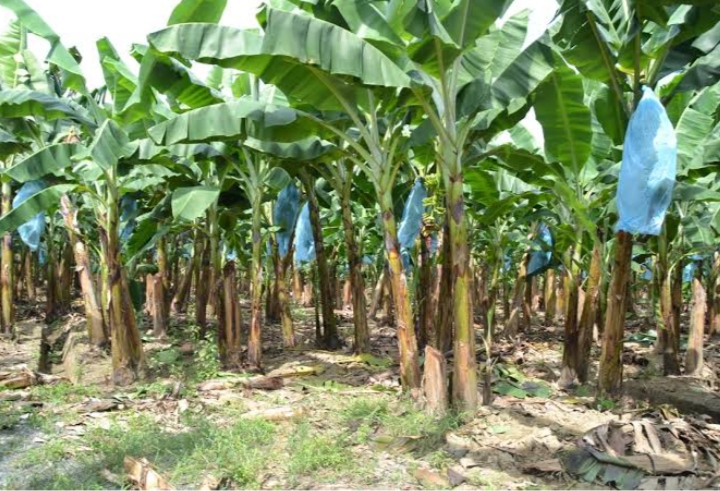
Proper spacing and good field management are essential for achieving high plantain yields and maintaining healthy plants.
Spacing
The recommended spacing for plantain depends on factors such as variety, soil fertility, and rainfall. Common planting arrangements include:
- 3 m × 3 m – approximately 1,111 plants per hectare
- 3 m × 2 m – approximately 1,667 plants per hectare
- 2.5 m × 2.5 m – approximately 1,600 plants per hectare
For most commercial plantations, a spacing of 3 m × 3 m is preferred because it provides adequate sunlight, improves air circulation, reduces disease incidence, and allows easier field operations.
Land Preparation and Planting
The land should be cleared and prepared properly before planting. Planting holes are dug and enriched with organic manure or compost. Healthy, disease-free suckers or tissue-cultured plantlets should be selected to ensure vigorous growth and reduce the risk of pest and disease problems.
Nutrient Management
Plantain requires a steady supply of nutrients for optimum growth. Organic manure such as compost or poultry manure can be applied during planting, while chemical fertilizers should be supplied in split applications throughout the growing season to support continuous development.
Weed Control
Weeds should be controlled regularly, particularly during the early stages of growth. Mulching and manual weeding are effective methods for minimizing weed competition and conserving soil moisture.
Desuckering
To prevent overcrowding and maintain productivity, excess suckers should be removed regularly. A common practice is to retain one mother plant, one follower, and one young sucker for future production.
Water and Mulch Management
Plantain grows best under adequate moisture conditions. Mulching helps conserve water, suppress weeds, improve soil fertility, and reduce erosion. Irrigation may be necessary during prolonged dry periods.
Pest and Disease Management
Regular monitoring is important for controlling pests such as weevils and nematodes, as well as diseases like Black Sigatoka and Panama disease. Using clean planting materials, maintaining field sanitation, and ensuring proper spacing can significantly reduce these problems.
Harvesting
Plantains are usually ready for harvest between 9 and 15 months after planting, depending on the variety and growing conditions. Harvesting should be done carefully to avoid damaging the fruits and to maintain market quality.
With proper spacing and management practices, a plantain plantation can achieve high productivity and produce quality fruits consistently.