
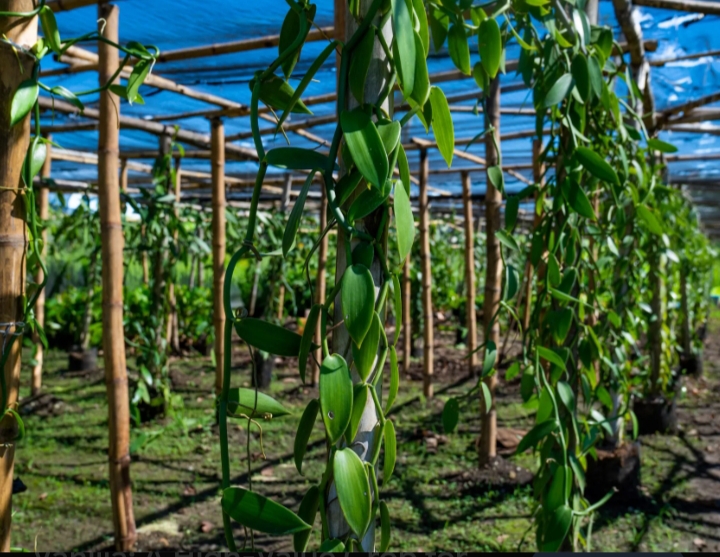
Vanilla farming is a highly profitable agricultural venture because the crop is scarce, time-consuming to produce, and in strong demand across global food, cosmetic, and fragrance industries.
Vanilla is derived from an orchid plant, and its cured pods are among the most expensive spices in the world due to the intensive farming and processing required.
Why vanilla is considered a premium crop
Vanilla is valuable because:
- It must be hand-pollinated since natural pollination is limited in most regions
- It takes several years (about 2–3 years) before it starts producing pods
- Post-harvest processing is long and labor-intensive
- Global demand is high while supply remains limited
It is widely used in:
- Bakery and confectionery products
- Ice cream and dairy industries
- Perfumes and fragrances
- Skincare and cosmetic formulations
Suitable growing conditions
Vanilla grows best in tropical climates with:
- Warm temperatures between 21°C and 32°C
- High humidity levels
- Partial shade conditions
- Rich, well-drained organic soil
- Support structures like trees or poles for climbing
It naturally thrives in rainforest-like environments.
Setting up a vanilla plantation
- Propagate using healthy vine cuttings
- Provide support systems for climbing growth
- Plant in shaded areas with controlled sunlight
- Ensure proper spacing for airflow
- Apply mulch to conserve soil moisture
Good farm setup is essential for healthy vine development.
Pollination requirements
A key feature of vanilla farming is:
- Flowers must be hand-pollinated early in the morning
- Each flower is open for only one day
- Skilled manual labor is needed for fruit formation
Without human intervention, pod production is very low or impossible in many regions.
Farm maintenance
- Regular but controlled watering
- Weed management around vines
- Application of organic fertilizers
- Monitoring for pests and diseases
- Pruning to manage vine growth and health
Proper care directly affects yield quality.
Harvesting and processing
- Pods are harvested about 8–9 months after pollination
- Fresh pods have no strong aroma initially
- Processing involves:
- Killing stage (heat treatment)
- Sweating and fermentation
- Slow drying process
- Conditioning for flavor development
This curing stage determines the final quality and market value.
Market opportunities
Vanilla has strong demand in:
- Food manufacturing industries
- Luxury perfume production
- Cosmetic and skincare brands
- International export markets
Well-processed vanilla beans attract very high prices globally.
Profit outlook
Vanilla farming is high-risk but high-reward:
- Low yields in early years
- Very high value per kilogram
- Strong long-term income potential when properly managed
Profit depends heavily on quality and curing process.
Key success factors
- Proper shade and microclimate control
- Effective hand-pollination practices
- Careful curing and drying methods
- Disease prevention and vine management
- Access to premium buyers or export channels