
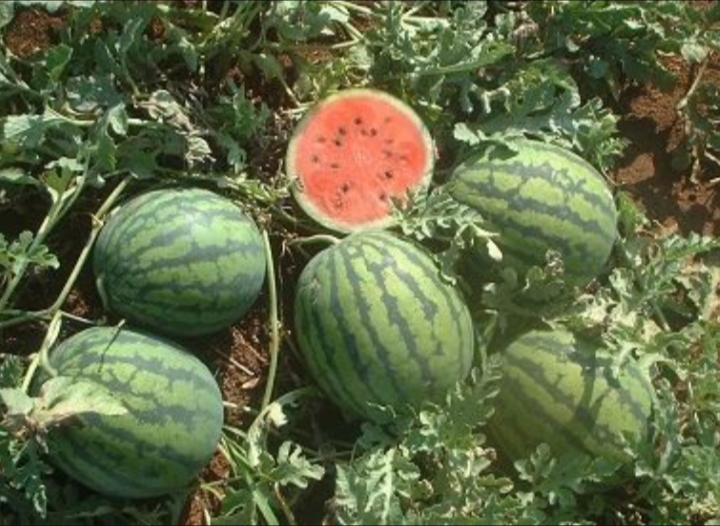
Watermelon can grow well in dry or semi-arid regions as long as there is a dependable water supply, especially through irrigation. It thrives in hot climates with plenty of sunshine and soils that drain easily.
Land Preparation and Site Selection
Select a location with fertile, sandy loam soil and good drainage, ideally with a pH between 6.0 and 7.0. Clear the land thoroughly and prepare it into ridges or raised beds to improve drainage and encourage strong root growth.
Planting
Seeds are usually sown directly in the field. Recommended spacing includes:
- 2–3 meters between rows
- 0.6–1 meter between plants
This spacing gives vines enough room to spread and ensures better airflow around the plants.
Irrigation Practices
In dry regions, consistent irrigation is essential for good yields.
- Drip irrigation is the most efficient method, as it conserves water and delivers it directly to the root zone.
- Watering should be frequent during germination, flowering, and fruit development stages.
- Irrigation should be reduced as fruits mature to enhance sweetness and improve quality.
Mulching
Mulch, whether organic or plastic, helps conserve soil moisture, control weeds, stabilize soil temperature, and improve overall water efficiency.
Fertilizer Use
Before planting, apply organic manure to improve soil fertility. During growth, use balanced fertilizers containing nitrogen, phosphorus, and potassium, based on soil requirements. Potassium is especially important for improving fruit size and taste.
Weed Control
Weeds should be managed early in the crop cycle to reduce competition. This can be done through mulching, hand weeding, or the careful use of herbicides.
Pest and Disease Control
Common pests include aphids, whiteflies, and fruit flies, while diseases such as powdery mildew and fusarium wilt may occur. Using resistant varieties, practicing crop rotation, and maintaining field cleanliness are effective control measures.
Harvesting
Watermelons are typically ready for harvest within 70–100 days after planting. Indicators of maturity include a dry tendril near the fruit, a dull sound when tapped, and a yellowish spot where the fruit rests on the ground.
Key Requirements for Success in Dry Areas
- Ensure a steady irrigation system is available.
- Choose varieties adapted to dry conditions.
- Use mulch to reduce water loss.
- Apply proper fertilizer and pest management practices.
- Avoid water stress during flowering and fruit development.
With proper irrigation and good agronomic practices, watermelon farming in dry areas can produce high yields and good-quality fruits.